
























Colombian Tribunal Sentences Former Paramilitary Leader to 40 Years for Atrocities
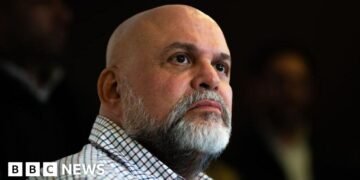
A Colombian tribunal has issued a 40-year prison sentence to Salvatore Mancuso, a former paramilitary leader, for his role in numerous murders and forced disappearances during the country’s prolonged conflict. This ruling is a significant move towards addressing the legacy of violence that has plagued Colombia for decades.
The case highlights ongoing challenges within the country’s justice system as it attempts to reconcile with a violent past, make sense of a complex web of crime, and address the rights of victims, particularly indigenous communities. The ruling could also shape future relations between the government and former combatants, as negotiations for peace continue.
Key Developments
- Mancuso was a commander in the United Self-Defence Forces of Colombia (AUC), known for its involvement in both paramilitary and drug trafficking activities.
- A special tribunal found that under Mancuso’s leadership, the AUC committed over 100 crimes, particularly targeting the indigenous Wayuu community from 2002 to 2006.
- If Mancuso cooperates with transitional justice and participates in reparation activities, his sentence could be reduced to eight years.
- Mancuso served a 15-year sentence in the United States for drug trafficking before being extradited back to Colombia in 2024.
- The Colombian government previously labeled Mancuso as a “promoter of peace,” a designation that has drawn sharp criticism from human rights advocates.
Full Report
Historical Context of Criminal Activities
Salvatore Mancuso’s 40-year sentence stems from his leadership role in the AUC, which was originally formed to protect landowners against attacks by Marxist guerrillas but later became deeply involved in drug trafficking. The AUC’s operations in La Guajira province reportedly resulted in the execution of numerous crimes, including murder, forced disappearances, and acts of gender-based violence. A truth commission has suggested that at least 450,000 people were killed in Colombia from 1985 to 2018 amidst the violence of armed groups, including the AUC.
Repercussions of the Ruling
The tribunal’s ruling could have significant implications for both victims and the political landscape in Colombia. Although Mancuso’s cooperation with transitional justice could reduce his sentence, it raises questions about fairness and accountability. Many victims and human rights organizations have expressed concerns about the legitimacy of offering leniency to individuals who have committed severe crimes.
Future of Peace Negotiations
Despite a peace agreement signed in 2005 to disband the AUC, splinter groups remained active and further entrenched themselves in drug trafficking. Mancuso’s attempted collaboration with authorities as a “promoter of peace” reflects the ongoing complexities in navigating peace between the government and various armed factions. His proposed testimony on the interactions between political figures and the AUC could further complicate the reconciliation process in Colombia.
Context & Previous Events
In 2008, Mancuso was extradited to the United States, where he faced and was convicted on drug trafficking charges. Following his 15-year sentence, he sought to relocate to Italy but was ultimately returned to Colombia in 2024. His actions and subsequent designation as a peace promoter under President Gustavo Petro’s administration have sparked extensive debate regarding the treatment of former paramilitary leaders in post-conflict Colombia.