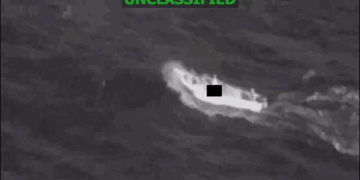























U.S. Coast Guard Continues Search for Survivors After Military Strikes Against Narco-Terrorists
The U.S. Coast Guard is actively searching for survivors following recent military strikes targeting three vessels linked to suspected narco-trafficking operations in the Eastern Pacific. These vessels, believed to be operated by terrorist organizations, were intercepted while transferring narcotics in international waters, raising significant concerns over drug trafficking and maritime security.
Why It Matters
The ongoing search underscores the U.S. government’s commitment to combatting drug trafficking and the involvement of terrorist organizations in such activities. The intersection of narcotics and terrorism poses broader implications for national security and international law enforcement cooperation, particularly in areas known for drug trafficking routes.
Key Developments
- The strikes occurred on Tuesday, resulting in the reported death of three individuals aboard one vessel; others reportedly abandoned two additional ships before they were destroyed.
- A U.S. Coast Guard HC-130J aircraft was deployed from Sacramento, California, to facilitate the search for potential survivors in an area spanning over 1,000 nautical miles.
- Coordination for search efforts commenced around 3 p.m. Tuesday after a notification was received regarding individuals in distress approximately 400 nautical miles southwest of the Mexico-Guatemala border.
- As of Friday, over 65 hours of search operations have been conducted, involving collaboration with partner nations and commercial vessels.
Full Report
The U.S. Coast Guard is in the midst of a search operation after military strikes targeted a convoy of three vessels reportedly connected to narco-terrorism. These events unfolded in international waters where the ships were said to have been engaged in narcotics trafficking.
On Tuesday, three suspected narco-terrorists were killed aboard one of the vessels, while the occupants of the other two abandoned ship prior to follow-on engagements that ultimately led to the sinking of those vessels. The U.S. Southern Command confirmed another strike on Wednesday that resulted in the deaths of five additional suspected narco-terrorists tied to the operation.
Following the strikes, Coast Guard personnel received urgent notification regarding people potentially in the water. In response, an HC-130J aircraft was dispatched to carry out aerial searches, issuing marine broadcasts to alert nearby maritime traffic about the situation.
Thus far, the ongoing search has involved more than 65 hours of coordinated efforts, which include the U.S. Coast Guard working closely with partner nations as well as utilizing the Automated Mutual-Assistance Vessel Rescue (AMVER) system. Searching for survivors remains a priority, although it remains uncertain how many individuals managed to escape the sinking vessels.
Context & Previous Events
This incident reflects broader challenges in combating narco-trafficking and its connections to terrorism. The active military engagement highlights the U.S. government’s strategic focus on disrupting drug trafficking networks that endanger public safety and national security.
As these operations unfold, authorities continue to grapple with the complex landscape of international drug trafficking, which often involves collaboration among various military and law enforcement entities across borders.
The response to these incidents represents a significant component of American foreign and domestic policy aimed at curbing the influence of illicit narcotics and ensuring safe maritime navigation in affected regions.






