






















U.S. Imposes Blockade on Venezuelan Oil Tankers, Drawing Criticism from China
The United States has escalated tensions with Venezuela by enacting a "total and complete" blockade on all sanctioned oil tankers entering and exiting the South American nation. This aggressive move, ordered by President Donald Trump, has prompted significant backlash from China, which has voiced support for Venezuela amid claims of U.S. "bullying."
Why It Matters
The U.S. blockade is a significant strategic maneuver in the ongoing crisis surrounding Venezuela, which is home to the world’s largest proven oil reserves. By exerting military pressure, Washington aims to reclaim perceived stolen assets and undermine President Nicolás Maduro’s government. The move not only raises the stakes for Venezuelan economic stability but also intensifies global geopolitical tensions, particularly with China, which has expressed firm opposition.
Key Developments
- U.S. Blockade Announced: President Trump declared the blockade in a social media post, emphasizing military presence in the region to enforce it.
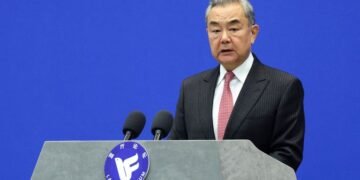
- China’s Support: Chinese Foreign Minister Wang Yi voiced strong backing for Venezuela, labeling U.S. actions as "unilateral bullying."
- Military Presence: The blockade is supported by a significant U.S. military presence, including the USS Gerald R Ford aircraft carrier.
- Escalating Operations: Trump confirmed a campaign that has involved numerous strikes against vessels allegedly trafficking drugs, resulting in high casualty rates.
- Venezuelan Government Response: Maduro’s government accused the U.S. of international law violations and a "grave threat" to the nation’s sovereignty.
Full Report
U.S. Military Actions
On Tuesday, President Trump stated that the U.S. military would remain stationed in the Caribbean until Venezuela compensates the U.S. for what he termed stolen resources, including oil and land. In his remarks, Trump claimed Venezuela is surrounded by "the largest armada ever assembled in the history of South America," signaling an intensified military posture intended to pressure Caracas.
Chinese Reaction
In a phone call to Venezuelan Foreign Minister Yvan Gil, Chinese Foreign Minister Wang Yi expressed Beijing’s support for Venezuela’s sovereignty. Wang criticized the U.S. military presence as an act of coercion, asserting that the international community recognizes Venezuela’s right to defend its interests. He stated, “China believes the international community understands and supports Venezuela’s position.”
Venezuelan Government’s Standpoint
The Venezuelan administration has accused Trump of initiating a pattern of threats and violations detrimental to international trade and navigation. Maduro claims that the U.S. aims to overthrow his regime, a stance he has maintained since Trump authorized covert CIA operations targeting his government.
Ongoing Strikes
Mr. Trump has linked Venezuelan actions to broader issues like drug trafficking, utilizing this narrative to justify military interventions in the region. Over the past months, U.S. military operations in both the Caribbean and Pacific have reportedly resulted in the deaths of multiple individuals, with the Trump administration branding them as "narco-terrorists."
Context & Previous Events
Tensions between the U.S. and Venezuela have flared significantly since 2017 when the Trump administration began imposing sanctions against Venezuelan oil exports. Utilizing a fleet of unregistered tankers, Maduro’s government has attempted to navigate these sanctions while still relying heavily on oil revenue, which plays a critical role in the nation’s economy. Re-elected in 2024 amidst accusations of electoral fraud, Maduro faces mounting pressures as the U.S. continues to bolster its military and economic strategies in the region.






