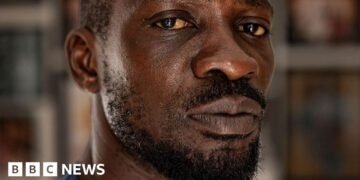























Bobi Wine Rejects Uganda’s Election Results, Calls for Protests
Uganda’s opposition leader, Bobi Wine, has announced he will not challenge the recent election results in court, citing a lack of trust in the judiciary. Instead, he is urging his supporters to engage in peaceful protests against President Yoweri Museveni’s government.
Why It Matters
The situation highlights significant concerns about democracy and human rights in Uganda amid rising political tensions. With Museveni in power since 1986 and allegations of electoral misconduct, the international community is closely monitoring developments in a nation facing increasing political repression.
Key Developments
-
Bobi Wine, whose real name is Robert Kyagulanyi, refuses to accept the election results, calling them "fake" and alleging irregularities such as ballot stuffing.
-
Museveni, the incumbent president, claimed 72% of the vote, while Wine received 25%. He labels the opposition’s actions as terrorism aimed at destabilizing his government.
-
Wine has faced threats, including comments from the army chief, Gen. Muhoozi Kainerugaba, who warned of serious consequences if Wine does not surrender.
-
In a recent interview, Wine spoke from hiding, expressing fears for his safety due to a raid by security forces on his family home.
- The Uganda Human Rights Commission reported that technical issues did not affect the election’s fairness, while African Union observers found no evidence of ballot stuffing but criticized internet restrictions during the electoral process.
Full Report
Opposition’s Stance
Bobi Wine has expressed deep skepticism regarding the judicial system in Uganda, which he believes is compromised. Speaking candidly from an undisclosed location, he emphasized the importance of civil resistance. "We encourage Ugandans to evoke any constitutional means to fight back," he declared.
Security Concerns
Wine’s safety has been a focal point following a raid on his home, which he described as an attempt by security forces to silence him. He recounted fleeing his residence due to concerns about an impending attack. Despite the recent restoration of internet services, he has struggled to communicate with his family due to interference.
Government Response
The police denied allegations of a raid, asserting that they were deployed to protect Wine. In contrast, Museveni’s administration accused the opposition of attempting to incite violence and unrest. In his victory address, Museveni asserted the invincibility of his party, the National Resistance Movement (NRM), and condemned the opposition.
Violence and Arrests
In the aftermath of the election, reports indicate that over 100 individuals have been jailed on various charges related to election-related incidents. Wine claimed that more than 100 people died due to election violence, although he provided no substantial evidence.
Threats to Opposition Leaders
Gen. Kainerugaba has issued explicit threats against Wine, declaring a time frame for submission to authorities and branding him an outlaw if he fails to comply. Such warnings underscore the escalating tensions and the perceived risks faced by opposition figures.
Context & Previous Events
This election marks a continuation of the political turmoil in Uganda, following Wine’s previous challenge against Museveni in 2021, where he later withdrew his case due to perceived biases within the court. Uganda has not seen a peaceful transfer of presidential power since gaining independence, raising concerns about the country’s democratic integrity. As the nation braces for potential unrest, the call for a "peaceful change" remains a central theme in Wine’s message to the public.