






















Alarming Allegations of Human Rights Violations at UAE-Run Prisons in Yemen
Yemen’s tumultuous civil war has taken a disturbing turn following recent revelations of secret detention facilities allegedly operated by the United Arab Emirates (UAE) and its allied forces. The discoveries, made during a rare media visit to former UAE military bases, echo long-standing claims of human rights abuses and torture that have plagued the region for years.
Why It Matters
The existence of these detention centers not only raises serious ethical concerns but also highlights the complex geopolitical dynamics at play in Yemen’s civil war. As the UAE and Yemeni government grapple with a fractured alliance, the implications for human rights and justice in the region are profound, affecting countless lives and exacerbating an already devastating humanitarian crisis.
Key Developments
- International journalists, including those from the BBC, were granted access to detention facilities on former UAE military bases in Yemen.
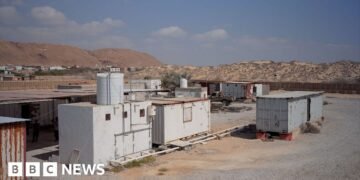
- Witness accounts confirmed that detainees had been held in dire conditions, including shipping containers lacking proper ventilation and basic amenities.
- The Yemeni government, initially allied with the UAE, has recently begun to distance itself amid escalating tensions between the two Gulf nations.
- Testimonies from former detainees reveal instances of severe torture, including beatings and sexual abuse.
- The Yemeni Information Minister acknowledged the existence of these prisons but expressed initial disbelief regarding the accounts of abuse.
Full Report
Conditions in Detention Facilities
During an organized visit to military bases in the Al-Dhaba Oil Export Area, journalists observed disturbing details consistent with long-standing allegations of human rights abuses. At one location, ten shipping containers were identified as makeshift cells, with severe overcrowding reported—some detainees claimed that up to 60 men were crammed into these spaces. Inside, marks scratched into the containers provided chilling evidence of the detainees’ length of stay.
Another site showcased eight small brick-and-cement cells, some measuring around one meter square, purportedly used for solitary confinement. Eyewitness accounts from former detainees described a harrowing environment where prisoners were blindfolded, bound, and left with no space to lie down.
Testimonies of Abuse
Former detainees provided harrowing accounts of the torture they endured. One man shared that he experienced three days of beatings following his arrest and was coerced into falsely confessing to ties with al-Qaeda. He mentioned that his captors included both Emirati soldiers and Yemeni fighters and described a shocking atmosphere of abuse, including sexual assault.
In addition, the narrative of a mother whose son was detained as a teenager for nearly a decade illustrated the devastating personal impact of the UAE’s crackdown on alleged political dissidents. She detailed how her son’s treatment included electric shocks and incessant beatings, stressing that he had never been a terrorist.
Official Responses and New Developments
Historically, these claims of torture and arbitrary detention have elicited denials from the UAE government. However, following the recent unrest and fragmentation of ties with the Yemeni government, Minister Moammar al-Eryani indicated that access to these previously restricted locations has finally been granted. He noted, “When we liberated them, we discovered these prisons,” underscoring the complex relationship between the Yemeni authorities and their erstwhile ally.
The Yemeni government has since issued a directive to close all illegal prisons and demanded the release of those detained unlawfully. However, families of detainees express skepticism about the government’s sincerity, fearing that arbitrary detention could persist under different management.
Context & Previous Events
The UAE has been involved in a military campaign against Houthi rebels in Yemen for nearly a decade. Despite initially partnering with the Yemeni government, the alliance has recently faltered, manifesting in control disputes over various territories. The UAE’s military withdrawal in January 2026 further complicated the situation, with factions vying for power and control over critical areas such as the port city of Mukalla. Human rights groups have consistently documented abuses, calling for accountability in a conflict that has already led to severe humanitarian consequences for the Yemeni populace.