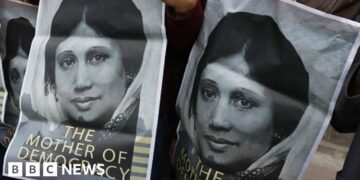























Thousands Mourn the Passing of Former Prime Minister Khaleda Zia in Dhaka
Hundreds of thousands of mourners gathered in Dhaka on Wednesday to bid farewell to Khaleda Zia, the first female prime minister of Bangladesh, who passed away at the age of 80. Her death follows a lengthy illness, prompting tributes from supporters across the nation.
Why It Matters
Khaleda Zia was a pivotal figure in Bangladesh’s political landscape, representing a complex legacy of leadership and opposition. Her passing marks the end of an era for many supporters, who view her as a symbol of resilience in the face of political adversity. As the country prepares for upcoming elections, her influence in the political arena remains significant.
Key Developments
- Thousands of mourners traveled to Dhaka from various parts of Bangladesh to attend the funeral.
- Zia’s body was carried in a hearse adorned with the national flag as crowds displayed flags and offered prayers.
- Attendees included foreign dignitaries such as India’s External Affairs Minister and Bhutan’s Foreign Minister.
- She will be interred alongside her husband, Ziaur Rahman, who was assassinated in 1981.
- Zia was expected to contest in the upcoming parliamentary elections scheduled for February 2026.
Full Report
A Final Farewell
On Wednesday, throngs of people lined the streets of Dhaka as the motorcade bearing Zia’s body passed by, paying their final respects. Many mourners, including activists from her political party, the Bangladesh Nationalist Party (BNP), expressed their gratitude and admiration for her contributions to women’s education and leadership opportunities.
Personal Tributes
Setara Sultana, a BNP activist, shared her emotional farewell: “I have come this far just to say goodbye. I know I won’t be able to see her face, but at least I could see the vehicle carrying her for the last rites.”
Another mourner, Sharmina Siraj, reflected on Zia’s legacy, calling her “an inspiration,” particularly for the educational initiatives she introduced for women.
Political Significance
Known for her uncompromising leadership style, Zia was a prominent figure in the struggle for democracy in Bangladesh. Her rivalry with Sheikh Hasina, the current Prime Minister, defined much of the political landscape in the country over the past few decades. Notably, she was imprisoned during a military-backed government in 2007 but continued to symbolize resistance against authoritarian rule.
Looking Ahead
Despite her declining health in recent years, the BNP announced Zia’s intention to participate in the 2026 parliamentary elections. Her son, Tarique Rahman, who recently returned to Bangladesh after a long exile, is poised to take a prominent political role.
Her passing has been described as a significant loss for the nation, with Rahman stating, “The country mourns the loss of a guiding presence that shaped its democratic aspirations.”
Context & Previous Events
Khaleda Zia’s journey took her from a homemaker to becoming Bangladesh’s first female prime minister. She first led the country in 1991 and later returned to power in 2001. Zia’s political career was marked by her refusal to engage in military-backed elections and her persistent opposition to military rule, enhancing her stature as a national leader.
Throughout her political life, Zia faced numerous challenges, including imprisonment, but remained an emblem of resistance against autocracy. Her enduring popularity, evidenced by the large turnout at her funeral, signifies her lasting impact on the Bangladeshi political landscape.