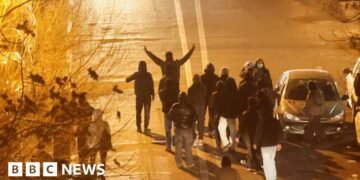























Iran’s Deadly Crackdown: Authorities Demand Ransom for Protesters’ Bodies
Authorities in Iran have reportedly killed over 2,400 individuals during a violent crackdown on widespread protests across the nation. Families of the deceased are now being confronted with alarming demands, including significant sums of money, for the release of their loved ones’ bodies for burial.
Why It Matters
The situation highlights the severe human rights violations occurring amid ongoing unrest in Iran. As families wrestle with grief, they are forced into a desperate dilemma—paying exorbitant fees to recover the bodies of those killed in protests against a regime facing deep-rooted public discontent. This alarming trend raises ethical questions about the treatment of the deceased and the lengths to which authorities will go to suppress dissent.
Key Developments
- More than 2,435 protesters have reportedly been killed since the unrest began over two weeks ago.
- Families are being demanded to pay hefty ransoms for the release of their loved ones’ bodies, with fees reported as high as 1 billion tomans (approximately $7,000).
- In some instances, hospital staff have alerted relatives to collect bodies quickly to avoid further extortion by security forces.
- A woman discovered her husband’s death only when hospital staff contacted her, urging her to collect his body before it could be seized.
- In a dramatic move, several families have broken into mortuaries out of fear that officials would claim the bodies for unapproved burials or other purposes.
Full Report
Events on the Ground
Reports indicate that victims of the crackdown, which began in response to economic instability and a devaluation of the Iranian currency, are being held in mortuaries with families facing financial demands before they can take their loved ones for burial. The situation has escalated to the point where ordinary citizens and activists find themselves under the scrutiny of security forces, who have been detaining individuals indiscriminately.
Families in various cities, including Rasht and Tehran, have shared heart-wrenching accounts of extortion. One family reported a demand of 700 million tomans ($5,000) for the release of their deceased, while another faced a staggering fee of 1 billion tomans ($7,000) for a seasonal worker’s body. In light of typical earnings for construction workers in Iran, which average less than $100 per month, such fees are beyond reach for many families.
Disturbing Trends
In some cases, families have been forewarned by hospital staff to act swiftly in retrieving bodies. One woman, whose identity is withheld for safety, recounted receiving a call informing her of her husband’s death. Without knowing the circumstances of his passing, she rushed to collect his body, driving for seven hours with her children to bury him after paying what she could.
Moreover, reports from Behesht-e Zahra mortuary in Tehran suggest that authorities have offered to release bodies free of charge under the condition that families falsely claim their deceased relatives were members of the Basij paramilitary force, killed by protesters. Some families have resisted these coercive offers, reflecting a broader reluctance to comply with government narratives.
Ongoing Violence and Arrests
The violence has not abated, with figures from the Human Rights Activists News Agency indicating that in addition to the 2,435 killed, approximately 18,470 individuals have been arrested. Security forces, armed with the backing of Revolutionary Guard intelligence units, continue to conduct arrests and suppress dissent across various regions.
Context & Previous Events
Protests erupted in Tehran on December 29, which began primarily as demonstrations against economic distress but quickly escalated into wider criticism of Iran’s clerical regime. These protests prompted a severe response from security forces, catalyzing human rights abuses and systemic violence against demonstrators. As protests spread throughout the country, the government has sought to maintain control through brutal methods, including the reported extortion of grieving families.
The ongoing turmoil continues to raise alarms among international human rights organizations, which remain restricted from entering the country to independently verify these developments.