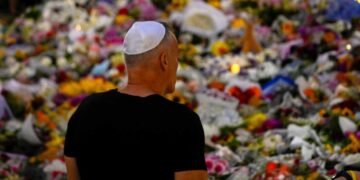























Mass Shooting in Sydney Triggers Renewed Calls for Gun Control
Mourners flocked to Bondi Pavilion to honor the victims of a devastating mass shooting at Bondi Beach in Sydney, Australia, which left at least 15 dead and 42 injured as a father and son targeted celebrants marking the beginning of Hanukkah. Prime Minister Anthony Albanese condemned the attack as a "terrorist incident," prompting a reevaluation of Australia’s already stringent gun laws.
Why It Matters
The shooting marks a significant turning point for Australia, a nation known for its stringent firearm regulations that were instituted following earlier tragedies. This incident raises urgent questions about the effectiveness of current laws and the potential for reform to prevent mass shootings in a country where such events are exceptionally rare.
Key Developments
- At least 15 victims were killed, and over 40 were hospitalized during the shooting.
- Albanese described the event as a terrorist act targeting Jewish Australians.
- In response, Australian officials are advocating for renewed restrictions on gun ownership.
- Proposed measures include renegotiating the National Firearms Agreement and creating a national firearms register.
- A public survey revealed 64% of Australians favor strengthening gun laws.
Full Report
Tragedy on Bondi Beach
The mass shooting occurred on a Sunday during a Hanukkah celebration at Bondi Beach, striking the community with shock and grief. The assailants, confirmed to be a father and son duo, opened fire amidst a peaceful gathering, leading Australia’s Prime Minister to label the incident as an attack on Jewish Australians.
Government Response and Proposed Measures
Following the shooting, Albanese and regional leaders convened to discuss a robust legislative response. They agreed on several proposals aimed at enhancing gun control, which include:
- Renegotiating the National Firearms Agreement, originally enacted in 1996.
- Establishing a National Firearms Register to create a comprehensive database of gun owners and their licenses.
- Increasing the use of criminal intelligence in the licensing process.
- Imposing limits on individual gun ownership and the types of firearms allowed.
- Ensuring that only Australian citizens can hold a firearms license, while introducing stricter customs regulations on firearms.
The Prime Minister emphasized the need to review and potentially strengthen existing laws to ensure public safety.
The Dark Legacy of Gun Control in Australia
Australia’s commitment to tight gun controls stems from the 1996 Port Arthur massacre, which galvanized a national response leading to the National Firearms Agreement. This measure significantly dropped firearm-related deaths and has been hailed internationally as a successful blueprint for gun reform.
The Changing Landscape of Gun Ownership
Despite these laws, firearm ownership in Australia has surged, with reports indicating over 4 million guns in circulation, a 25% increase since 1996. Some argue that specific provisions of the National Firearms Agreement have not been effectively enforced, giving rise to concerns about the potential for future incidents.
Albanese noted the long-term impacts of the previous reforms and underscored that Australia must remain vigilant against violence.
Community Sentiment
Public sentiment appears to support further restrictions on firearms. A January survey indicated that a significant majority of Australians wish for stronger gun control measures, contrasting sharply with debates surrounding gun ownership in countries like the U.S.
Context & Previous Events
Gun laws in Australia were transformed after the Port Arthur massacre, when 35 people were killed by a single gunman. These legislative changes aimed to unify and tighten gun regulations across states and were supported by leaders from various political backgrounds. Until now, Australia had enjoyed a more than two-decade period free from mass shootings, contributing to a culture that prioritizes community safety over individual gun ownership rights. In the wake of recent events, the Australian government is once again confronting the challenges of gun violence and public safety.






