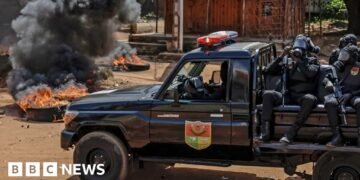























Military Seizes Power in Guinea-Bissau Amid Electoral Uncertainty
The recent military takeover in Guinea-Bissau has raised eyebrows globally, with skepticism over its legitimacy following a tense electoral campaign. On Wednesday, soldiers announced their control of the country just days after the populace cast votes in a presidential election, stirring confusion and allegations both within and outside the nation.
Why It Matters
Guinea-Bissau, a nation plagued by political instability and coup attempts since gaining independence in 1974, faces critical crossroads. Analysts, opposition figures, and civil society organizations have questioned the military’s claims, suggesting that the coup could be part of a broader strategy by ousted President Umaro Sissoco Embaló to retain power or suppress dissent in a fragile democratic environment.
Key Developments
- Military Intervention: Soldiers reported a coup on state television, claiming it was to prevent a political plot aimed at destabilizing the nation.
- Arrest of Key Figures: President Umaro Sissoco Embaló, along with several prominent politicians including former Prime Minister Domingos Pereira, was detained during the military operation.
- Election Process Halted: The military has suspended the electoral process, obstructing the release of the presidential vote results initially slated for announcement the day after the coup.
- International Reactions: Former leaders Goodluck Jonathan and Ousmane Sonko voiced concerns over the authenticity of the coup, pointing to irregularities in the typical conduct of such takeovers.
- Civil Discontent: Protests erupted demanding the release of detained politicians and the publication of election results, reflecting a populace divided in its response to the military’s actions.
Full Report
What Occurred Before the Coup
The coup transpired shortly after presidential election results were anticipated. With Embaló running for a second term against Fernando Dias da Costa, confusion arose when Dias was backed by Pereira, who was disqualified for alleged late submission of candidacy papers. This disqualification led to heightened tensions as citizens awaited crucial electoral updates.
Day of the Coup
Just a few days after voting, gunfire erupted around the presidential palace, and Embaló reported being arrested by uniformed men. Military representatives then addressed the nation, asserting that they had acted against a plot involving political elements allegedly linked to a notorious drug trafficker. Embaló confirmed his ouster in a brief conversation with French media, while the military subsequently targeted the electoral commission’s headquarters, destroying essential documents and computer systems.
Scepticism and Reactions
The rapid exit of Embaló to Senegal and the military’s portrayal of the takeover cast doubts on their narrative. Critics argue that during historical coups, deposed leaders typically do not enjoy such freedoms. Observers like Jonathan have labeled the events as a "ceremonial coup," questioning the authenticity of the military’s motives. Meanwhile, Gen Horta N’Tam, named as the new military leader, has raised further concern due to his previous alliance with Embaló.
Civil society reactions have varied, with some supporting military intervention and others calling for a return to democratic processes. The reaction in the streets has been mixed, with demonstrations erupting to demand the restoration of electoral integrity.
Context & Previous Events
Guinea-Bissau has a tumultuous history characterized by multiple coups since its independence from Portugal in 1974, with at least nine attempted or successful takeovers on record. Previous administrations have commonly faced widespread accusations of internal plots and conspiracies, adding layers of complexity to the current political climate. In late 2023, Embaló had previously dissolved the opposition-controlled parliament, further fueling suspicions regarding his governance style and political maneuvers.
As the situation unfolds, the international community continues to watch closely, weighing the implications of yet another potential disruption to Guinea-Bissau’s fragile democracy.