






















India’s Push for a Semiconductor Industry Gains Momentum Amid Global Supply Challenges
India is making significant strides towards establishing a robust semiconductor industry, responding to worldwide supply chain vulnerabilities highlighted during the pandemic. As companies like Tejas Networks shift towards local sourcing, the nation aims to build its own chip manufacturing capabilities to bolster reliability in tech supply chains.
Why It Matters
The global semiconductor shortage has revealed critical weaknesses in supply chains, emphasizing the need for manufacturing not just design expertise. With a self-sufficient semiconductor ecosystem, India can reduce reliance on foreign manufacturers, ensuring a steady supply for various industries including telecommunications, automotive, and defense.
Key Developments
- India is investing in its semiconductor ecosystem to enhance supply chain resilience.
- Tejas Networks designs telecom chips in India but relies on overseas production.
- Kaynes Semicon launched the first government-supported semiconductor assembly plant in Gujarat.
- Focus is on packaging and testing rather than producing the most advanced chips initially.
- Training skilled personnel poses a significant challenge for the burgeoning industry.
Full Report
Semiconductor Industry Development
Arnob Roy, co-founder of Tejas Networks, emphasized the critical role of reliable semiconductor supply in telecommunications. His firm, based in Bangalore, produces the essential equipment that supports mobile phone networks and broadband connections, relying heavily on specialized chips designed specifically for telecom tasks. Unlike consumer chips, these telecom chips manage vast amounts of data from numerous users, requiring high reliability and fault tolerance, a necessity in today’s interconnected world.
India, recognized for its strong talent pool with 20% of global semiconductor engineers, excels in chip design but lacks domestic manufacturing capabilities. This gap became glaringly evident during the COVID-19 pandemic when global supply chains faltered, forcing companies across various sectors to curtail production. Roy pointed out that the pandemic underscored the risks associated with concentrated semiconductor production and inspired India to begin developing its semiconductor infrastructure.
Amitesh Kumar Sinha from India’s Ministry of Electronics and Information Technology echoed these sentiments, citing the pressing need to create a resilient semiconductor ecosystem. This effort includes strategizing where India can effectively compete within the semiconductor production process.
Manufacturing Steps and Local Initiatives
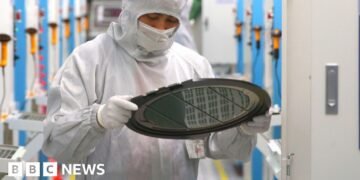
The semiconductor manufacturing process consists of several stages, starting with design—a strength for India. However, the wafer fabrication stage, which involves etching circuits onto silicon wafers, is dominated globally by companies in Taiwan. India is aiming to focus on the assembly, testing, and packaging of chips, which are considered easier to initiate compared to establishing semiconductor fabrication facilities.
Kaynes Semicon, established in 2023, has already launched the first semiconductor facility backed by the Indian government in Gujarat, investing $260 million. The company began production in November of the previous year, although, as CEO Raghu Panicker noted, the chips produced will not be of the most advanced types found in high-tech devices. Instead, the focus will be on chips utilized in sectors like transportation and defense—areas considered strategically crucial for India.
Training personnel to work in this new industry has presented significant hurdles. Panicker acknowledged the need for specialized skills in semiconductor manufacturing, stating that experience cannot be rushed, marking this as a major bottleneck in the industry’s growth.
Context & Previous Events
Prior to the pandemic, India had been recognized for its expertise in semiconductor design, with many global chip companies operating major design centers in the country. The events surrounding COVID-19 shook the status quo, catalyzing a shift towards building a domestic semiconductor manufacturing base. This effort has gained traction in recent months, highlighting India’s determination to secure its position in the global tech landscape.