






















The Aftermath of the Tai Po Fire: Grief, Anger, and Arrests
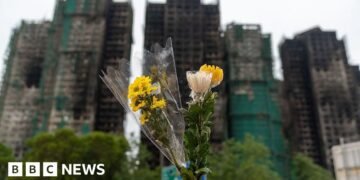
The tragic Tai Po fire has ignited widespread grief and outrage in Hong Kong, where at least 159 lives were lost and thousands displaced. In a shocking twist, university student Miles Kwan was arrested after launching a petition seeking answers from local authorities regarding the catastrophic blaze.
Why It Matters
This incident has exposed deep-seated frustrations within Hong Kong society regarding government accountability and transparency. As officials navigate this tragedy, public sentiment reflects a demand for justice and clarity, signaling a potential escalation in tensions surrounding state control and civil liberties.
Key Developments
- University student Miles Kwan was arrested by national security police on suspicion of sedition after initiating a petition that garnered over 10,000 signatures in just one day.
- Authorities have emphasized the need to maintain public order, warning against attempts to exploit the situation for political gain.
- Hong Kong’s Chief Executive John Lee announced measures to support victims and investigate the fire, including forming an independent committee and reviewing building regulations.
- Fifteen individuals have been arrested for manslaughter related to the fire, highlighting broader concerns about building safety protocols.
- Public outcry over Kwan’s arrest has intensified, with many questioning the government’s motives amid the community’s mourning.
Full Report
Arrest of Miles Kwan
Following the fire, Kwan’s petition demanded accountability and transparency from the government, leading to his arrest by national security police. Critics have labeled his detention as “baffling,” suggesting it reflects a pattern of suppression typical of Beijing’s approach to dissent. Kwan is currently out on bail, but his arrest has drawn significant public and media scrutiny.
Government Response and Public Sentiment
Hong Kong officials have insisted that their actions are a response to maintaining law and order. Ronny Tong, a member of the Executive Council, argues that the government is being prudent in its handling of the situation. Regina Ip, another lawmaker, commented on the need to prevent a recurrence of the 2019 protests, suggesting that the government is acting out of caution.
Despite this stance, many residents are questioning the rationale behind the arrests. Pro-democracy activist Samuel Chu argued that Kwan’s inquiries represented a human response to tragedy, not a political campaign. Kwan’s petition echoes past protest sentiments, which many believe is being criminalized under the guise of maintaining public order.
Broader Implications
In the wake of the fire, the Hong Kong government has arrested individuals linked to the construction sector, underscoring the urgency of addressing safety regulations. This situation has been further complicated by the 2019 protests and their aftermath, where authorities have adopted stringent measures to control narratives and dissent.
Chief Executive John Lee stated the government is committed to ensuring justice and transparency, yet many observers note that the absence of accountability for high-ranking officials raises concerns about meaningful reform.
Context & Previous Events
The Tai Po fire is one of the deadliest incidents in recent Hong Kong history, reminiscent of past tragedies that have stirred public anger and calls for accountability. Following previous protests in 2019, the Hong Kong government has adopted a hardline approach to dissent, including the implementation of new security laws that have restricted freedoms and civil liberties.
In response to the fire’s aftermath, authorities have also removed unsafe mesh netting from buildings under renovation, indicating recognition of failings that contributed to the disaster.