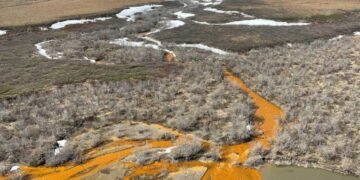























Arctic Rivers Transforming into "Rusting Rivers" Amid Climate Change
New findings reveal that numerous rivers and streams across northern Alaska are turning a striking shade of orange, signaling a significant environmental change due to climate warming. This phenomenon, referred to as "rusting rivers," underscores the profound impacts of climate change in a region already warming faster than the global average.
Why It Matters
The changes in the Arctic have broad implications not just for local ecosystems but also for global climate patterns. As the Arctic continues to warm, it may affect sea levels, weather phenomena, and northern fisheries, impacting communities both locally and worldwide.
Key Developments
- Hundreds of rivers in Alaska are experiencing increased iron discoloration as a result of thawing permafrost.
- This transformation was identified in the annual Arctic Report Card published by the National Oceanic and Atmospheric Administration (NOAA).
- The report indicates that 2023 was the warmest and wettest year on record for the Arctic region.
- The report highlighted potential risks associated with the release of heavy metals from thawing permafrost into local waterways.
Full Report
Observations of Change
In summer 2023, researchers observed bright orange rivers across the Brooks Range attributed not to human pollution but to naturally released iron from melting permafrost. According to U.S. Geological Survey hydrologist Josh Koch, residents and pilots in the area first noted this peculiar change around 2018. Subsequent investigations using satellite imagery and water testing confirmed extensive contamination across remote regions of Alaska.
Koch explained that the melting of permafrost allows water and oxygen to penetrate the previously frozen soil, releasing not only iron but also other heavy metals such as copper and aluminum into nearby streams. While their presence could adversely affect aquatic life and potentially contaminate drinking water, studies have yet to confirm any immediate harmful effects.
Accelerating Climate Change
The Arctic season from 2022 to 2023 marked the highest recorded temperatures and precipitation levels in history, as emphasized by Matthew Druckenmiller, a senior scientist at the National Snow and Ice Data Center. He noted that changes in the Arctic have far-reaching effects, influencing global weather and sea levels.
"The Arctic functions as the planet’s refrigerator," Druckenmiller remarked, underscoring the critical role the region plays in regulating global climate. Reductions in Arctic ice also correlate with changes in marine ecosystems, affecting both indigenous hunting practices and commercial fisheries in the region.
Responding to Challenges
The latest report faces challenges amid shifting political attitudes towards climate science in the U.S. The Trump administration had previously labeled climate change as a "hoax," leading to budget cuts for federal climate research and a reduction in resources for significant scientific assessments. Despite these challenges, NOAA remains committed to comprehensive climate monitoring.
Scientific Collaboration
The Arctic Report Card results from an independent collaboration of global scientists, providing a robust perspective on climate change’s impact. This year’s findings included concerns over the implications of fossil fuel consumption, which significantly contributes to climate change.
Context & Previous Events
The Arctic Report Card has been published annually for 20 years, documenting rapid climate changes in this sensitive region. In recent years, the northernmost areas of the planet have seen unprecedented warming, as evidenced by the notable loss of ice mass—a trend that has been consistently breaking records.






