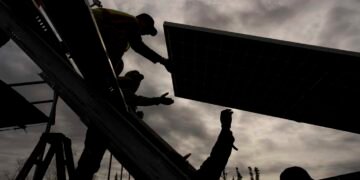























Trump Administration’s Renewables Pushback Amid Rising Electricity Demand
Amid increasing electricity demand across the United States, the Trump administration and Congressional Republicans are intensifying their efforts against the renewable energy sector. Their campaign threatens to hinder a burgeoning industry, raising concerns over future energy costs and sustainability.
Why It Matters
As the nation grapples with escalating electricity needs, the administration’s approach could have significant ramifications for energy prices and the broader economy. Experts warn that curtailing the growth of renewable energy sources could lead to increased costs for consumers and hinder business expansion, making it imperative to monitor these developments closely.
Key Developments
- The Trump administration has attempted to halt the growth of renewable energy projects through various federal agency actions.
- Congressional Republicans voted to eliminate tax credits for renewable energy, potentially raising project costs.
- Predictions from the International Energy Agency indicate a decline in the anticipated growth of renewable power in the U.S.
- Electricity demand in the U.S. is expected to rise by an average of 5.7% annually over the next five years, primarily due to the construction of data centers.
- Despite the administration’s actions, clean energy production is projected to increase significantly this year.
Full Report
Rise in Power Demand
Electricity usage in the U.S. is forecasted to climb at its fastest rate in decades, driven largely by the booming demand from data centers. The U.S. Energy Information Administration predicts a growth of nearly one-third in electricity generated from large solar plants this year, alongside a healthy increase in wind and battery capacity.
Administration’s Actions Against Renewables
The current administration’s campaign against renewables is marked by efforts from various federal entities:
- The Environmental Protection Agency has moved to cut funding that supports low-income households in solar energy installations.
- The Bureau of Ocean Energy Management has issued stop-work orders targeting offshore wind projects.
- New restrictions from the Interior Department limit the issuance of permits for renewable projects on public lands, creating what nearly 150 solar companies have termed a "nearly complete moratorium" on project approvals.
Industry’s Response
Industry leaders have expressed concerns over the potential impact of these government actions. Analysts note that if the trend continues, it could lead to a slowdown in the renewable sector—a shift towards natural gas, the dominant source of U.S. electricity, could result.
Battery Projects and Natural Gas Growth
As investments in battery storage surge, enabling the storage and distribution of renewable energy, demand for natural gas has increased simultaneously. Orders for gas turbines are reportedly set to triple this year compared to the previous one, reflecting a broader pivot towards traditional energy sources in light of changing demand patterns.
Future Outlook
The ramifications of these shifts could lead to rising power prices, with some forecasts estimating increases of 15% to 40% for residential electricity by 2030. As energy officials outline the need for improved transmission lines to facilitate electricity distribution, the impact of these developments on sustainability and climate goals remains uncertain.
Context & Previous Events
In recent years, the U.S. has seen a remarkable rise in both solar and wind energy projects driven by market demand and favorable policies. However, recent actions by the current administration point towards a significant policy reversal. Industry experts stress that despite challenges, renewables are crucial to meeting both current and future energy demands efficiently.






