






















US Navy Admiral Testifies Amid Controversy Over Military Strikes on Alleged Drug Boats
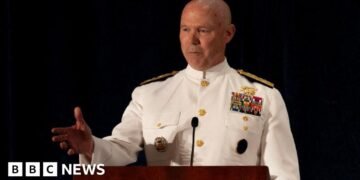
A senior US Navy official testified that Defense Secretary Pete Hegseth did not authorize a controversial military strike on September 2 targeting alleged drug traffickers in the Caribbean. Lawmakers from both parties expressed grave concerns following a classified briefing that examined the incident, sparking ongoing debate over the legality of US military actions against suspected drug boats.
Why It Matters
The legal and ethical dimensions of military strikes on allegedly unarmed individuals raise critical questions about US foreign policy and military conduct. With bipartisan scrutiny emerging, these incidents may influence how Congress oversees military operations and their implications for international law and human rights.
Key Developments
- Adm. Frank Bradley testified that he was responsible for military strikes against a drug boat, dismissing claims that Hegseth ordered an additional strike.
- Democrats and Republicans have called for transparency, with top lawmakers urging the release of video footage from the incident.
- US military actions have resulted in more than 80 deaths across Caribbean and Eastern Pacific regions, raising legal concerns.
- Lawmakers are questioning the legality of targeting individuals who had already begun to surrender or were rendered incapable of continuing combat.
- A complaint has been filed with the Inter-American Court of Human Rights following the death of a Colombian citizen linked to the strikes.
Full Report
Admiral’s Testimony
During a closed-door briefing, Adm. Frank Bradley stated that he acted within his legal authority during the second strike on a boat involved in drug trafficking. Bradley highlighted that he believed the action was necessary due to ongoing threats posed by the vessel. This assertion generated significant concern among lawmakers, particularly regarding the implications for international law.
Lawmakers React
Rep. Jim Himes, the senior Democrat on the House Intelligence Committee, expressed serious concerns over the conduct witnessed in the briefing. Himes remarked, “What I saw in that room was one of the most troubling things I’ve seen in my time in public service,” emphasizing the need for Congressional oversight and transparency.
Sen. Tom Cotton, chair of the Senate Intelligence Committee, supported Bradley’s actions as appropriate, stating he observed survivors attempting to re-enter the boat. However, other legislators, including Sen. Jack Reed, voiced their disquiet over the legality of the operations.
Incidents Surrounding the Strikes
The September 2 military operation involved a double strike, with reports indicating the first attack left survivors who were subsequently targeted in the second attack. Accounts noted that these individuals appeared to be attempting to salvage drugs when hit again. The White House confirmed that Adm. Bradley, not Hegseth, ultimately ordered the second strike, and Bradley is anticipated to further clarify his decisions in upcoming sessions with lawmakers.
International Law Implications
Experts have raised alarming questions regarding whether the second strike could violate international law principles, as those struck appeared to have already incapacitated themselves through prior engagement. Insiders noted that vulnerable combatants should be apprehended and protected under existing conventions, rather than targeted for elimination.
Context & Previous Events
The incident on September 2 is part of a broader military campaign by the US against drug trafficking targets, which has reportedly taken over 80 lives in carries and Pacific waters. Previous military actions were justified by US officials as necessary to combat drug trafficking, even as they prompted criticism from various lawmakers and human rights advocates.
Venezuela has also condemned these military strikes, accusing the US of exacerbating regional tensions in its efforts to remove the existing government. The Trump administration defended its operations as part of a non-international armed conflict against drug traffickers, a classification that has come under scrutiny since the strikes took place.