






















Nvidia Unveils Alpamayo: A New Frontier for Self-Driving Technology
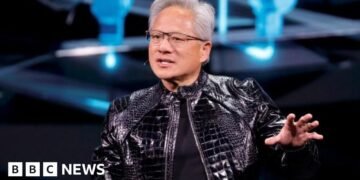
Nvidia has introduced Alpamayo, a cutting-edge technology platform aimed at enhancing self-driving vehicles, during the annual CES technology conference in Las Vegas. The company’s CEO, Jensen Huang, emphasized that this innovation would equip autonomous cars with the ability to reason through complex scenarios, potentially revolutionizing the safety and efficiency of driverless transport.
Why It Matters
As AI technology increasingly integrates into physical products, Nvidia’s focus on self-driving cars positions it at the forefront of an evolving automotive landscape. This development signifies a strategic shift from reliance on software innovations, such as ChatGPT, to tangible applications of AI in the automotive industry. With partnerships being forged and substantial market values at stake, the competition in the self-driving sector is intensifying.
Key Developments
- Introduction of Alpamayo: A tech platform that adds reasoning capabilities to self-driving cars.
- Collaboration with Mercedes: Nvidia is working with Mercedes to develop a driverless vehicle expected to launch in the U.S. within the next few months, with plans for subsequent releases in Europe and Asia.
- Open-Source Model: The Alpamayo model is now accessible on Hugging Face, allowing researchers to utilize and retrain the code freely.
- Video Demonstration: A showcase featured a Mercedes-Benz autonomously navigating San Francisco while a passenger remained hands-off.
- Future Plans: Nvidia aims to roll out a robotaxi service in partnership with an undisclosed collaborator by next year.
Full Report
Advancements in Autonomous Driving
At CES, Huang articulated the vision behind Alpamayo, stating that it enables cars to navigate complicated driving scenarios safely and effectively. This reasoning capability means vehicles can articulate their driving decisions, significantly improving transparency and rider confidence. Huang remarked on the lessons learned by Nvidia in aiding partners to develop robotic systems.
Competitive Landscape
Nvidia’s foray into self-driving technology brings it into direct competition with automotive leaders like Tesla. Responding to the unveiled platform, Tesla’s Elon Musk pointed out the challenges in perfecting autonomous vehicles, highlighting that reaching a high level of capability is only part of the journey.
Market Response
Following Huang’s presentation, Nvidia’s shares experienced a slight uptick in after-hours trading. The company, currently valued at over $4.5 trillion, is navigating concerns regarding the sustainability of AI demand amidst potential overhype.
Context & Previous Events
Previously, Nvidia gained acclaim as a leading chip manufacturer primarily focused on fueling the AI revolution through software. However, the tech firm is now pivoting towards hardware applications, particularly in the self-driving sector, further establishing itself as a comprehensive provider of AI-powered solutions for various industries.






