






















U.S. Military Operation in Venezuela Faces Legal Scrutiny and International Backlash
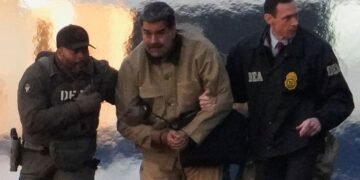
The recent U.S. military operation in Venezuela, which resulted in the detention of President Nicolás Maduro and his wife, has ignited a significant debate over its legality and the broader implications for international relations. The operation involved over 150 aircraft and was characterized by explosions in Caracas, leading to accusations of a rogue action by the Trump administration.
Why It Matters
This incident raises critical questions about the use of military force in international relations and its adherence to established legal norms. As various governments and international bodies, including the United Nations, respond, the event could set a precedent for future military interventions around the world, affecting global stability and diplomatic relations.
Key Developments
- Military Operation: The U.S. carried out a military operation capturing Maduro, who has faced multiple charges, including narco-terrorism and other crimes.
- International Law Concerns: Experts and officials, including UN Secretary-General António Guterres, have raised concerns about the legality of the operation, questioning whether it violated international law.
- Expert Opinions: Legal experts have stated that the attack had "no legal justification" and emphasized that international law prohibits the invasion of a sovereign nation.
- Potential Precedent: The operation may prompt other nations, like China and Russia, to adopt similar military approaches against neighboring countries.
Full Report
Legal Challenges
Mariano de Alba, a Venezuelan legal expert specializing in international law, stated there was no legal basis for the U.S. action. Fellow legal commentator Joshua Rozenberg echoed these sentiments, highlighting the UN Charter’s stipulations against the use of military force in violation of a nation’s sovereignty. They both pointed out that, without UN approval or an armed attack against it, the U.S. cannot claim self-defense in this scenario.
Reactions from International Leaders
Various nations, including France, Spain, Germany, and Canada, have expressed reservations about whether the U.S. action contravened international law. The Trump administration has been accused of disregarding these legal frameworks in favor of pursuing its political agenda in Latin America.
U.S. Justifications
The Trump administration has long accused Maduro’s government of complicity in drug trafficking and failing to collaborate on anti-drug initiatives. Maduro has faced similar charges since 2020, ranging from narco-terrorism conspiracy to possession of illegal weaponry. However, both Rozenberg and de Alba assert that these motivations do not provide a legal justification for the military intervention.
Future Implications
Rozenberg suggested that President Trump may ignore international condemnation of the operation, believing it represents a shift towards a new world order. This could embolden future military interventions, particularly in countries with political systems that the U.S. finds unsatisfactory. However, de Alba noted that the U.S. might face legal hurdles in targeting other countries like Colombia and Mexico, where leaders have been duly elected.
Context & Previous Events
Maduro has ruled Venezuela since 2013 and has been accused of authoritarian practices, including suppressing opposition and manipulating election outcomes. In 2020, he was charged in the United States with various offenses related to drug trafficking and terrorism. His regime has faced intense scrutiny from both domestic and international observers.
The current situation emphasizes the fragility of international law and the potential consequences of unilateral military actions. As nations around the world watch closely, the fallout from this operation could resonate far beyond Venezuela’s borders.






