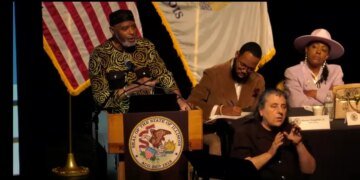























University of Illinois Hosts Discussions on Reparations
The University of Illinois Urbana-Champaign recently convened a meeting of the African Descent-Citizens Reparations Commission, where faculty members expressed strong support for reparations for African American descendants of slavery. This initiative aims to address historical injustices and promote equity within the state.
Why It Matters
The push for reparations has gained momentum across various states and communities, signaling an increasing acknowledgment of historical wrongs tied to slavery and systemic racism. The Illinois commission, formed by the state legislature, seeks to study and implement measures that can help restore equity, making this discussion timely and significant.
Key Developments
- Professors’ Advocacy: Sundiata Keita Cha-Jua and LaKisha David, along with doctoral candidate Naomi Simmons-Thorne, spoke at the commission meeting, promoting not just individual reparations but collective ones for communities.
- Analysis of Black Workers: Cha-Jua presented findings suggesting a history of labor exploitation shared between Black and White workers, tying this to a broader critique of capitalism.
- Reparations Definitions: Simmons-Thorne defined "rectificatory justice" as central to the reparations movement, noting that this concept has philosophical roots dating back centuries.
- Educational Surveys: Simmons-Thorne also introduced a survey aimed at determining public understanding of reparations, focusing on educational practices around this topic.
- Community Support Initiatives: David highlighted the Illinois Family Roots Pilot Program, which aids African American families in tracing their ancestry through DNA testing, linking genealogy to reparations.
Full Report
Professors Discuss Collective Reparations
During the meeting, Cha-Jua outlined the historical context of Black workers’ experiences in Illinois, describing their roles as sharecroppers, laborers, and domestic servants. He emphasized that the discussion around reparations should not be limited to individual payments but should also include community reparations, addressing the collective historical trauma experienced by African Americans.
Concepts of Justice
Simmons-Thorne elaborated on the notion of "rectificatory justice," asserting that this is crucial for understanding the reparations movement. She stressed that the concept is often misunderstood and rarely discussed in philosophical circles, despite its long-standing significance.
Public Sentiment on Reparations
Simmons-Thorne’s survey targets local sentiments regarding reparations and evaluates whether schools are adequately teaching about historical precedents, with examples including Evanston’s reparations model, which began distributing cash payments to eligible African Americans in 2019.
Genealogy as Reparations
David presented her work with The African Kinship Reunion initiative, which helps African Americans access their genealogical history. This program, offering free DNA testing, aims to mend familial ties severed by historical injustices, providing a different form of reparative justice.
Context & Previous Events
In 2019, Evanston, Illinois, became the first U.S. locality to implement reparations through cash payments to eligible residents, distributing up to $25,000. Across the nation, the conversation surrounding reparations continues to evolve, with various states and communities exploring potential models and frameworks for addressing past injustices.






