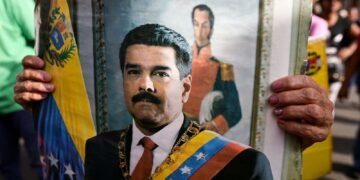























The Aftermath of Maduro’s Removal: Venezuelans Face Uncertain Future
The recent ousting of Nicolas Maduro has sent shockwaves through Venezuela, yet many residents in the capital, Caracas, are met with trepidation instead of jubilation. Local journalist Rosali Hernandez emphasized that while the regime’s fall is significant, the expectation for immediate change is low due to the entrenched nature of political power in the country.
Why It Matters
This development is crucial, as it raises questions about the future political landscape in Venezuela. The removal of a leader marked by allegations of economic mismanagement and human rights violations could prompt a shift towards democracy. However, fears linger among citizens, who remain unsure whether true reform will materialize in the wake of such upheaval.
Key Developments
- Venezuelans remain apprehensive, with minimal public celebrations of Maduro’s removal.
- State-run media dominates information sources after three channels were shut down.
- Basic utilities like power, internet, and water are reported to be disrupted in the wake of the U.S. military operation.
- Long queues form across Caracas for essential goods and services as residents prepare for potential shortages.
- Security concerns grow due to the presence of irregular armed groups known as colectivos, which complicate public safety.
Full Report
Public Sentiment and Reactions
In contrast to celebrations witnessed in other parts of South America, the atmosphere in Caracas is one of fear and uncertainty. Journalist Rosali Hernandez remarked that residents are “living like they’re in a cave,” with limited access to reliable news following the shutdown of independent media outlets. The only broadcasting option for many is a state-controlled channel featuring Maduro’s speeches.
Infrastructure and Safety Concerns
Infrastructure problems are exacerbating the situation, as power and communication outages plague various neighborhoods. Reports indicate that some power substations were damaged during the U.S. military operation, intensifying the already dire circumstances. Residents have flocked to open markets, pharmacies, and gas stations, fearing lasting instability.
The Role of Irregular Armed Groups
Amidst this turmoil, paramilitary groups known as colectivos have surfaced throughout Caracas, creating an unpredictable environment. These factions operate independently, heightening fears of escalating violence. Historically, colectivos have been employed to suppress dissent and control opposition, complicating the security landscape for ordinary citizens.
Political Landscape
Hernandez noted that the rapid nature of Maduro’s removal caught many off guard, but highlighted that he was not the primary source of power within Venezuela’s political apparatus. Key figures like Jorge Rodriguez and Diosdado Cabello remain influential, complicating expectations for genuine change. The ongoing presence of individuals accused of human rights abuses raises questions about whether Venezuelans will feel truly liberated in a post-Maduro era.
Context & Previous Events
The U.S. military operation that led to Maduro’s removal created a vacuum of authority in Caracas. Previously, Venezuelans were accustomed to a government characterized by control and repression. Observers note that for a real transformation to occur, key leaders aligned with Maduro’s regime must also be addressed.






