






















Venezuelan Leadership Crisis Deepens Following Maduro’s Ouster
In a stunning turn of events, U.S. military forces have captured Venezuelan President Nicolás Maduro, leading to uncertainty and chaos within the country’s political landscape. This development raises critical questions about the future governance of Venezuela and the potential implications of U.S. involvement.
Why It Matters
The capture of Maduro, a ruler who has braved failed coup attempts and extensive sanctions, marks a pivotal moment in Venezuelan history. The situation presents significant risks to both the political stability and humanitarian conditions within this oil-rich nation. A power vacuum could further exacerbate an already dire socio-economic crisis, raising alarm among international observers and Venezuelans alike.
Key Developments
- The U.S. military’s capture of Maduro has left citizens in Caracas grappling with a sudden shift in governance.
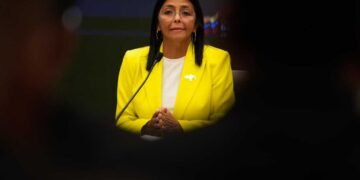
- Vice President Delcy Rodríguez has been positioned as interim leader by Venezuela’s high court, but her legitimacy is contested.
- President Trump indicated that Rodríguez is willing to cooperate with the U.S. administration, proposing a shift in control over Venezuela’s governance.
- Despite significant unrest, many Venezuelans remain fearful, adhering to a safety-first mindset in light of unprecedented military actions.
- Maduro’s officials, including military leaders, have expressed defiance against U.S. intervention and a commitment to resisting external pressures.
Full Report
Immediate Reaction
Residents of Caracas reacted with confusion and fear. Lines formed at supermarkets and gas stations as citizens sought to secure essential supplies. Many are questioning the implications of a U.S.-backed leadership change. Juan Pablo Petrone, a local resident, expressed the widespread anxiety: “What will happen tomorrow? What will happen in the next hour?”
President Trump revealed plans for U.S. oversight, possibly in coordination with Rodríguez, who has been vice president since 2018. In its first move, the Venezuelan high court directed Rodríguez to serve as interim president. While Trump praised her willingness to collaborate, he dismissed opposition leader María Corina Machado’s credibility, stating she lacked the necessary support among the public.
Government Responses
Rodríguez attempted to assert control, urging the release of Maduro and his wife, Cilia Flores. She condemned the U.S. military operation as a violation of international law. “There is only one president in this country, and his name is Nicolás Maduro,” she proclaimed, flanked by military leaders who vowed to resist U.S. influence. Defense Minister Gen. Vladimir Padrino López and Interior Minister Diosdado Cabello urged citizens to protect national sovereignty, underscoring their commitment to resist foreign intervention.
Public demonstrations of loyalty to the government included rallies and the burning of American flags. However, a significant portion of the populace remained indoors, apprehensive of possible violence amid the uproar.
Uncertain Transition
While Trump claimed Rodríguez had been sworn in as president, Venezuelan state media continued to label her as vice president, creating an atmosphere of uncertainty regarding the legitimacy of any leadership transition. The Venezuelan constitution mandates an election within 30 days of a president’s absence, but experts debate whether this applies under the circumstances of the U.S. military intervention.
Rodríguez’s past ties to Wall Street and the oil industry suggest a complex relationship with potential U.S. interests. Despite her leftist credentials, she has maintained connections with Republican figures who oppose external regime change.
Political Dynamics Ahead
Rodríguez faces significant challenges in asserting her authority amidst existing power dynamics in Venezuela. Military hard-liners, some with significant criminal allegations in the U.S., continue to hold influence. Political analysts suggest that historical patterns may see a consolidation of power among current leaders, as previous adversities have led them to act in unison during crises.
Context & Previous Events
Maduro’s government has long encountered legitimacy crises, resulting in a history marked by mass protests, military defections, and intense economic hardship. The U.S. has consistently imposed sanctions in response to human rights concerns and alleged electoral fraud. The latest military intervention is unprecedented, reshaping the political landscape and international relations in the region.