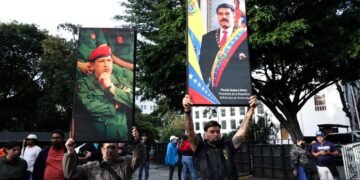























U.S. Military Operation Captures Venezuelan President Maduro
President Donald Trump’s recent declaration following the capture of Nicolás Maduro marks a significant escalation in U.S. intervention in Venezuela. Amidst growing tensions and accusations of narco-trafficking, the U.S. military operation has sparked global debate about its legality and potential implications for both nations.
Why It Matters
This unprecedented military action raises questions about U.S. sovereignty and interventionism. Many are concerned about the implications for international law and the potential for escalated conflict in Latin America, as countries both support and condemn the U.S.’s aggressive stance toward Maduro’s regime.
Key Developments
- Maduro Captured: Nicolás Maduro, alongside his wife, was taken into U.S. custody during a military operation in Caracas, with Trump indicating they would face charges in New York.
- New Leadership: Venezuela’s Vice President, Delcy Rodríguez, was declared the new president, despite Maduro’s claims of authority and defense of national resources.
- Civilian Impact: Initial reports indicate both military targets and civilian areas were struck, leading to injuries and potential deaths, although specific figures remain undisclosed.
- Political Fallout: Responses within the U.S. show deep divisions, with some lawmakers questioning the constitutionality of the intervention, while others applaud it.
- International Reactions: Mixed responses from global leaders highlight concerns about regional stability; some praise the operation while others call for adherence to international law.
Full Report
Operation Details
Early Saturday morning, a series of explosions erupted in Caracas around 2 a.m. local time. Witnesses reported hearing detonations and seeing fires at La Carlota military airbase. Gen. Dan Caine, Chairman of the Joint Chiefs of Staff, confirmed that multiple military and civilian locations were targeted. According to Venezuela’s Defense Minister, strikes impacted both military installations and residential areas, with casualties being assessed.
President Trump stated that U.S. forces had sustained injuries, but no fatalities during the mission. He shared an image purportedly showing Maduro in restraint en route to the U.S. aboard the USS Iwo Jima.
Accusations Against Maduro
Trump’s administration expressed long-standing accusations against Maduro, labeling him as an international drug trafficker involved in the "Cartel de los Soles." U.S. Attorney General Pam Bondi revealed notable charges connected to drug trafficking and narco-terrorism conspiracies dating back to 1999. Maduro has denied these claims, blaming the U.S. for attempting to usurp Venezuela’s resources.
Future of Venezuelan Leadership
While Trump announced Rodríguez as the new interim president, the long-term power structure remains uncertain. Analysts suggest Maduro’s loyalists may resist or remain to preserve the regime’s interests. María Corina Machado, a prominent opposition leader, emphasized the legitimate need for change and called for an end to Maduro’s regime.
Diverse Political Response
The military intervention has prompted varied reactions in the U.S. Democrats argue that the action is unconstitutional without Congressional approval, while several Republican leaders commend Trump for his decisive efforts. Concerns among Latin American countries about regional stability and refugee influx have surfaced, leading to military mobilizations from nations like Colombia.
Context & Previous Events
This military operation follows a series of U.S. sanctions against Venezuela and previous efforts to pressure Maduro’s government, including blockades and targeted strikes against alleged drug shipment operations. The legitimacy of Maduro’s government has been questioned internationally, emphasizing a broader narrative of corruption and mismanagement dating back to his predecessor, Hugo Chávez.






