






















Maduro’s Regime Faces Scrutiny Amidst U.S. Military Action and Ongoing Crisis
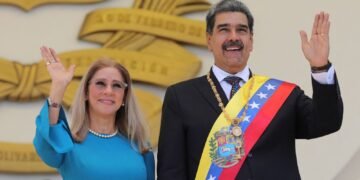
Venezuelan President Nicolas Maduro, often labeled a dictator, continues to exert control over a nation on the brink of collapse. The U.S. recently escalated its military posture in the region, raising stakes at a time when millions of Venezuelans are struggling against severe economic hardship.
Why It Matters
Maduro’s administration has been marked by economic turmoil and widespread emigration; seven million Venezuelans have fled the country, equivalent to the entire population of Norway. The ongoing crisis poses significant humanitarian challenges and affects geopolitical dynamics in Latin America, especially with rising tensions between the U.S. and authoritarian regimes.
Key Developments
- The U.S. has reaffirmed its commitment to confronting Maduro’s regime through military action and sanctions.
- Maduro has been criticized internationally for electoral fraud, notably in the 2024 elections, where he claimed victory despite widespread evidence suggesting otherwise.
- Economic conditions in Venezuela have worsened, attributed to both mismanagement and impacts from international sanctions.
- The opposition, spearheaded by Juan Guaido, has struggled to gain traction against a regime that employs state violence and repression to maintain control.
Full Report
Military Action and U.S. Strategy
The United States has taken a firmer stance against Maduro’s regime, deploying forces in the region and enforcing strict sanctions. Following the election of Donald Trump, the U.S. intensified its measures, viewing Maduro as a significant threat. These actions are part of an overarching strategy aimed at fostering dissent within Venezuela.
Electoral Controversies
Maduro’s tenure is marred by allegations of electoral fraud, particularly during the 2024 elections, which most observers believe the opposition won decisively. Despite this, Maduro’s regime has denied legitimacy to such claims, bolstering its position through enforced control and manipulation.
Economic Collapse
Venezuela, once an oil-rich nation, now grapples with extreme poverty and widespread corruption. Under Maduro’s leadership, the economic situation has deteriorated to catastrophic levels, resulting in social instability and a humanitarian crisis. Many Venezuelans continue to suffer, with essential resources and public institutions collapsing.
Opposition and Repression
Struggling against Maduro’s authoritarian grip, opposition groups have faced severe repression. The secret police have been accused of violence against protesters and dissenters, heightening tensions within the country. Despite the dangers, figures like Guaido have rallied international support, though their efforts have yet to yield substantial change.
Context & Previous Events
Nicolas Maduro’s rise to power came after the death of his mentor, Hugo Chavez, who had implemented sweeping socialist reforms in Venezuela. However, Maduro’s reign has been characterized by discontent among both the public and political elites, leading to significant political unrest and challenges to his authority.
The U.S. has actively opposed Maduro’s rule since he took office, particularly after the onset of his presidency, which saw increasing authoritarian measures and human rights violations. In recent years, external geopolitical shifts, notably the conflict between Russia and Ukraine, have altered the landscape, prompting the West to reconsider its position on Venezuelan oil amid sanctions on Russia.
As Maduro’s administration faces mounting pressure, both from within and outside the country, the path ahead remains fraught with uncertainty, leaving the future of Venezuela hanging in the balance.