






















U.S. Interventions in Latin America: A Historical Overview
Despite recent tensions, the United States has long engaged in interventions throughout Latin America, rooted in the Monroe Doctrine and evolving through various geopolitical circumstances. This history reflects a pattern of U.S. behavior aimed at countering threats, particularly communism, but has often resulted in complex and controversial outcomes.
Why It Matters
Understanding the intricacies of U.S. foreign policy in Latin America is crucial as it shapes regional dynamics and federal relations. Recent actions against Venezuela highlight ongoing tensions and the reapplication of strategies from the past, which have led to both immediate and long-term consequences for the nations involved.
Key Developments
- Pressure on Venezuela: The Trump administration has intensified efforts against Nicolás Maduro, with military actions involving strikes on maritime drug transport and oil seizures.
- Historical Context: Continuing the precedent set by President Theodore Roosevelt, U.S. actions reflect a long-standing belief in acting as a regional enforcer, a concept originating from the Monroe Doctrine.
- Variety of Interventions: Historical U.S. interventions range from the covert overthrow of Guatemala’s democratically elected leader in 1954 to orchestrating military invasions, such as those in Grenada and Panama.
Full Report
Counterrevolutionary Tactics
The application of a "Big Stick" policy highlights a trajectory of U.S. interventionism beginning with the Monroe Doctrine, which discouraged European powers from meddling in the Americas. Following World War II, the focus shifted primarily to combating perceived communist influences, particularly during the Cold War. This approach often involved covert operations, enabling right-wing regimes to take hold in several countries.
Significant Interventions
-
The Overthrow of Guatemala (1954): Under President Eisenhower, U.S. support for a military coup against Jacobo Árbenz was driven by concerns over land reforms that affected U.S. corporate interests. The aftermath fostered repression and entrenched authoritarian rule.
-
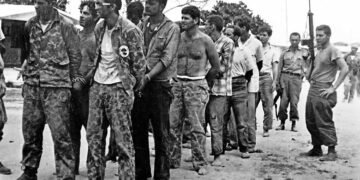
The Bay of Pigs Invasion (1961): Aimed at deposing Fidel Castro, this invasion orchestrated by the CIA featured an army of Cuban exiles but ended in failure, reinforcing Castro’s position and escalating tensions that contributed to the Cuban Missile Crisis.
-
U.S. Invasion of Grenada (1983): President Reagan justified military intervention amid concerns of Soviet influence in the region. The U.S. ultimately helped establish a new government, bringing relative stability to Grenada.
-
Support for Nicaraguan Contras: Under Reagan’s directive, U.S. backing of the Contra rebels against the Sandinista government led to lengthy conflict and significant human suffering, culminating in the Iran-Contra Affair, a major scandal involving illegal arms sales.
- The U.S. Invasion of Panama (1989): Following the decline of Manuel Noriega as a useful ally, President George H.W. Bush ordered a military intervention resulting in Noriega’s ousting but ultimately establishing a stable democracy in Panama, albeit under contentious circumstances.
Context & Previous Events
Historically, U.S. foreign policy in Latin America has been shaped by a mix of ideologies and strategic interests. The post-World War II era marked a significant pivot towards anti-communism, often justifying intervention in sovereign nations. The overarching belief was that foreign ideologies presented a direct threat to U.S. interests, as articulated during the Cold War. Over time, however, the outcomes of these interventions have revealed the complexities and problems inherent in such policies, emphasizing the inconsistent results of American actions in the region.






