






















Statelessness in South Africa: Thousands Live Without Citizenship or Rights
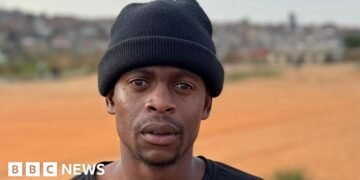
In South Africa, an estimated 10,000 individuals born within its borders struggle with statelessness, facing barriers that prevent them from accessing education, healthcare, and job opportunities. Arnold Ncube, a 25-year-old resident of Thembisa township near Johannesburg, embodies the plight of these individuals, grappling with the profound challenges of not having official documentation to prove his citizenship.
Why It Matters
The issue of statelessness affects millions globally and poses significant societal challenges. Individuals without citizenship are often rendered invisible, unable to participate fully in their communities. This lack of recognition contributes to cycles of poverty and impedes national development efforts, as these individuals cannot contribute to the economy or society at large.
Key Developments
- Arnold Ncube, born in Johannesburg, has no birth certificate due to being abandoned by his parents and cannot prove his South African citizenship.
- Christy Chitengu, a former stateless individual, only acquired South African citizenship three years ago with legal assistance.
- South Africa’s home affairs department has not responded to media inquiries about its approach to addressing statelessness.
- Statelessness is a global issue, potentially affecting up to 15 million people worldwide.
- Advocates argue for policy reforms to enable children born to undocumented migrants to receive citizenship.
Full Report
The Pain of Statelessness
Arnold Ncube does menial labor washing cars in Thembisa, forced to navigate life without a proper identity. Abandoned at a young age, he never acquired a birth certificate, which barred him from attending secondary school and limited his opportunities greatly. “It’s a painful thing,” he expresses, reflecting on the feeling of invisibility. “You don’t exist. It’s like you’re living in the shadows.”
Challenges Faced by the Stateless
Among the thousands facing similar hardships, many like Arnold feel trapped in a cycle of despair. Without citizenship, they cannot obtain essential documents or access public services, including education and healthcare. This administrative barrier prevents them from gaining a foothold in society, leaving many to work in the informal sector.
A Glimmer of Hope
Despite the hurdles, there is a sense of hope. Arnold has secured legal representation to help him claim his citizenship and aims to pursue studies in computer science. He dreams of a brighter future, one where he can break free from the shadows of statelessness.
Human Rights Perspectives
Christy Chitengu, who experienced statelessness in her youth, underscores the necessity for reform. With the assistance of legal advocates, she finally obtained citizenship three years ago after realizing that her handwritten birth certificate was not accepted. Chitengu argues that citizenship is a fundamental right and not a privilege, emphasizing the human dignity of those affected.
Government and Global Context
Inquiries directed at South Africa’s home affairs department regarding the issue of statelessness have gone unanswered, highlighting a significant communicative gap in addressing this ongoing problem. Globally, the prevalence of statelessness spans millions of individuals, with experts arguing that policy changes are urgently needed to minimize its impacts, especially for children born to undocumented migrants.
Context & Previous Events
Statelessness in South Africa is compounded by extensive undocumented migration. Many individuals born in the country are left without recognized citizenship due to insufficient record-keeping and stringent immigration laws. Organizations like the UNHCR advocate for the rights of stateless individuals and suggest measures to alleviate their plight by allowing easier pathways to citizenship.