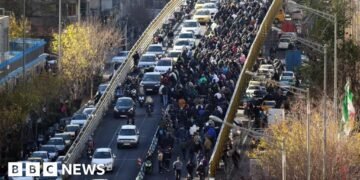























Protests in Iran Erupt Amid Rising Cost of Living; Two Dead in Unrest
Following five days of escalating protests in Iran over the surging cost of living, two individuals have reportedly been killed during clashes between demonstrators and security forces in Lordegan. The unrest, fueled by a significant currency collapse, highlights growing discontent with the Iranian government and its leadership.
Why It Matters
The current protests mark a continuation of civil unrest in Iran, emphasizing widespread grievances regarding economic hardship and governmental authority. As these demonstrations gain momentum, they raise questions about the stability of the regime and its response to popular dissent. The unrest carries echoes of previous uprisings, notably the 2022 protests following the high-profile death of Mahsa Amini, ultimately posing a challenge to the Iranian government’s long-standing control.
Key Developments
- Reports from the Fars news agency and the human rights organization Hengaw indicate the deaths occurred during confrontations between demonstrators and security forces in Lordegan.
- Eyewitness videos on social media captured scenes of escalating violence, including vehicles being set ablaze amid clashes.
- Protesters have voiced calls for the end of the supreme leader’s rule and a potential return to the monarchy.
- Schools, universities, and public institutions were closed as authorities declared a bank holiday, supposedly to conserve energy amid colder weather, though critics viewed it as a tactic to suppress the protests.
- Tight security measures have been implemented in Tehran, where the unrest initially ignited among shopkeepers upset by the currency’s decline.
Full Report
Clashes in Lordegan
On Thursday, local reports confirmed that two individuals were killed in Lordegan during the ongoing protests. The semi-official Fars agency cited an unnamed official regarding the fatalities, although it remained unclear whether the deceased were protesters or security personnel. Human rights group Hengaw identified the victims as protesters, naming them Ahmad Jalil and Sajjad Valamanesh. The accounts of these deaths remain unverified by independent sources.
Clashes and Casualties
In a separate incident reported elsewhere, a member of Iran’s Revolutionary Guards is said to have lost his life during confrontations with protesters in Kudasht, located in Lorestan province. The deceased’s identity has not been confirmed, with some protesters alleging he was one of their own, while state media attributed the death to clashes. Additionally, 13 police officers and Basij members sustained injuries due to violent incidents involving stone-throwing in the area.
Government Response
In a bid to address the unrest, President Masoud Pezeshkian has pledged that the government will heed the “legitimate demands” of demonstrators. Conversely, Prosecutor General Mohammad Movahedi-Azad cautioned against actions aimed at destabilization, promising a "decisive response" to any attempts to escalate the situation.
Context & Previous Events
The recent protests are among the most significant since the 2022 uprising spurred by the death of Mahsa Amini, who was in police custody for allegedly violating Iran’s strict dress code. Although the current demonstrations have yet to achieve the same scale, the discontent reflects persistent economic and political issues in the country. Starting in Tehran, the protests quickly spread, now encompassing various cities as university students join the calls for change, underscoring the depth of frustration within the population.