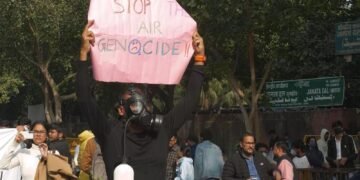























Air Quality Crisis in Delhi: Activists Demand Urgent Action
Delhi, grappling with severe air pollution, is witnessing public protests as citizens demand urgent governmental intervention. Amid a winter session of parliament, activists assert that air quality continues to deteriorate, adversely impacting public health and quality of life.
Why It Matters
India’s capital has earned the unfortunate distinction of being the world’s most polluted city. The ongoing crisis underscores the urgent need for governmental accountability and effective measures to combat pollution, affecting not only Delhi but also millions across the broader Indo-Gangetic Plain.
Key Developments
- Activists gathered at Jantar Mantar, near parliament, urging government action on air pollution.
- Bhavreen Kandhari, a leading activist, expressed disappointment that parliament did not address air pollution during its session.
- The air quality index has consistently recorded hazardous levels, prompting health warnings.
- A UN Environment Programme report indicated that 99% of the global population faces air pollution, with significantly higher impacts in low and middle-income nations like India.
- Air pollution is linked to 1.72 million deaths in India, surpassing fatalities from terror attacks and natural disasters combined.
Full Report
Activism and Public Outcry
"Despite the rains from the monsoon, the air is still poisonous," shared Bhavreen Kandhari, a prominent local activist. Hundreds rallied at Jantar Mantar, raising their voices against the ongoing pollution crisis. Many participants, including parents and health advocates, conveyed their dismay that the parliament session failed to address their concerns regarding air quality.
The Health Crisis
Delhi’s air is a lethal mix of toxic gases and particulates, leading to severe health issues, including respiratory problems, heart conditions, and cognitive decline. Air pollutants such as PM2.5 particles can penetrate deep into the lungs, posing increased risks to the population. According to doctors, the cold weather exacerbates respiratory ailments, with healthcare facilities observing significant spikes in patient numbers during winter months.
Dr. Alok Ranjan, a general practitioner in Ghaziabad, stated that he regularly sees over 300 patients in winter, with a notable increase due to pollution-related issues. "Air pollution affects all organs of the body, and our life expectancy has decreased as morbidity rises," he mentioned.
Government Response and Challenges
Attempts to manage the pollution have proven inadequate. The government has implemented temporary measures such as banning certain vehicles during hazardous air quality days and spraying water on roads to lessen airborne particles. However, these interventions have often been described as inconsistent and poorly enforced.
Farm fires—a traditional farming practice—continue to be a significant contributor to the pollution crisis. Despite a Supreme Court ruling banning this practice, many farmers, like Ram Singh from Haryana, argue that they are unjustly targeted while larger industries remain unaccountable. Singh remarked, "It’s the rich industries causing pollution, yet we bear the blame."
Context & Previous Events
The ongoing air pollution crisis in Delhi has gradually worsened over recent years, with the city’s residents facing extreme air quality ratings since colder months set in. The World Health Organization’s guidelines for safe air quality levels are consistently exceeded. Previous governmental actions have included temporary bans on construction and measures against polluting vehicles, but these have largely failed to yield long-term solutions to the crisis.