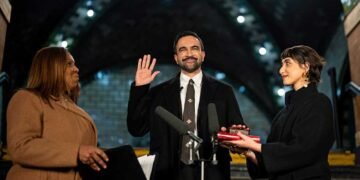























Zohran Mamdani Sworn in as New York City’s First Muslim Mayor
In a historic ceremony at New York City’s former City Hall subway station, Zohran Kwame Mamdani was sworn in early New Year’s Day as the city’s 112th mayor. He makes history as the first Muslim mayor in the U.S.’s largest city, marking a significant milestone in the political landscape against a backdrop of increasing immigration restrictions.
Why It Matters
Mamdani’s election as mayor signifies not only a transformative moment for New York City but also embodies a broader narrative of resilience amid political challenges. His platform, primarily focused on affordability and accessibility, resonates with many residents struggling with socio-economic issues, particularly under the current climate of rising living costs amidst stringent government policies on immigration.
Key Developments
- Mamdani was sworn in by New York Attorney General Letitia James in a low-key ceremony on January 1, 2026.
- The new mayor promises sweeping reforms, including free bus service, universal child care, and rent freezes for many apartments.
- Mamdani’s victory signifies a shift in political dynamics within New York, as he defeated former Governor Andrew Cuomo by nearly ten points.
- Despite criticisms from various quarters, including former President Donald Trump, Mamdani garnered support from a diverse coalition of backers.
Full Report
Swearing-In Ceremony
Shortly after midnight, Zohran Mamdani was officially sworn in during a modest ceremony attended by family and close allies. Under the historic subway station, he expressed his gratitude and excitement for the role, calling it “the honor and privilege of a lifetime.” Attorney General Letitia James, who officiated the oath, received applause as she congratulated him.
Campaign Focus and Challenges
Mamdani’s ascent reflects a remarkable journey from a little-known state lawmaker to the office of mayor, coinciding with a challenging political climate for immigrants, especially Muslims. His campaign addressed critical issues like affordability, aiming to alleviate financial burdens for residents through measures such as free transit and enhanced childcare access.
Moreover, Mamdani’s ability to build a coalition, including endorsements from influential Jewish community leaders, played a crucial role in his victory, despite facing significant opposition from critics, including Trump, who labeled him a “communist.” Throughout the election cycle, Mamdani emphasized unity and progressive change as central themes.
Obstacles Ahead
Although Mamdani’s platform is ambitious, implementing these proposals will require support from centrist Democrats in Albany, where tax changes could encounter substantial pushback. However, Governor Kathy Hochul’s endorsement of free childcare initiatives signals potential bipartisan cooperation.
As Mamdani moves forward, he has appointed experienced officials to his cabinet, including NYPD Commissioner Jessica Tisch. Nonetheless, the administration faces hurdles, such as the withdrawal of a key appointee due to past controversial social media remarks.
Context & Previous Events
Mamdani’s election victory in November 2025 marked a significant nod to progressive politics within New York City, following years of shifting demographics and attitudes toward governance. His win came at a time when immigration policies were being reoriented under the Trump administration, intensifying scrutiny on candidates with immigrant backgrounds. Facing a politically charged environment, Mamdani’s success showcases an evolving understanding of representation in one of America’s most diverse cities.






