






















Protests Erupt in Iran Amid Currency Collapse
Protests in Iran have intensified, leading to an attempted breach of a governmental facility in Fasa as demonstrators express frustration over a severe currency crisis. This unrest marks the fourth consecutive day of demonstrations, raising alarms over social stability in the nation.
Why It Matters
The current wave of protests highlights the ongoing economic struggles faced by Iranians, particularly the rising cost of living fueled by the plummeting value of the national currency against the U.S. dollar. The government’s response to these dissenting voices could either exacerbate tensions or provide an opportunity for reform amidst longstanding grievances regarding economic and political issues.
Key Developments
- Protesters attempted to storm a local government building in Fasa, resulting in three police officers sustaining injuries and four arrests.
- Demonstrations have spread to western provinces such as Hamedan and Lorestan.
- The Iranian government declared a bank holiday on Wednesday, ostensibly to reduce energy consumption, which many interpret as a measure to stem the demonstrations.
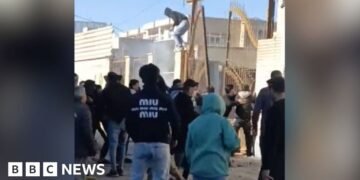
- Footage verified by the BBC depicts crowds breaching the governor’s office gate, with security forces responding with gunfire and tear gas.
- In response to the unrest, schools, universities, and public offices nationwide closed for the day.
- The protests originated in Tehran on Sunday, primarily among shopkeepers reacting to the currency’s sharp devaluation.
- President Masoud Pezeshkian pledged to address the “legitimate demands” of protestors, while the prosecutor general warned against any attempts to destabilize the situation.
Full Report
Events in Fasa
In Fasa, protesters made a significant attempt to break into a local government building. Reports indicate three police officers were injured during these efforts, and local authorities confirmed that four individuals were arrested. Such confrontations have prompted heightened security measures across several affected areas.
Widespread Unrest
As protests expanded beyond Fasa, confrontations were also documented in provinces like Hamedan and Lorestan. The Iranian authorities intervened by declaring a national bank holiday, asserting that the closure was essential for energy conservation due to cold weather. However, many citizens view this decision as a strategy to diminish protest activities.
Government Response
Reportedly, during clashes, security personnel deployed tear gas and live ammunition against demonstrators. Video evidence shared on social media corroborates these events. Schools and public institutions across Iran were closed, reflecting the seriousness with which the government is treating the ongoing unrest.
Statements from Officials
President Pezeshkian expressed a commitment to listening to the valid grievances asserted by the protestors. Conversely, the prosecutor general, Mohammad Movahedi-Azad, expressed a firm stance against any actions perceived as threatening stability, warning of a “decisive response” to unrest. This dual approach illustrates the government’s struggle to balance dissenting voices with internal security concerns.
Context & Previous Events
This surge in protests is the most significant demonstration of public dissent since the uprising in 2022, which was ignited by the death of Mahsa Amini, a woman who lost her life while in police custody under accusations of not adhering to strict dress codes. While the current protests have gained traction, they have not reached the same scale as the previous movements in 2022.