






















Artists Cancel Performances at Kennedy Center Amid Controversial Name Change
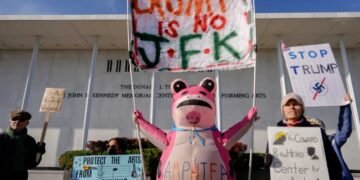
Demonstrations erupted at the John F. Kennedy Center for the Performing Arts following the announcement that President Donald Trump’s name would be added to the facility. This development has prompted a wave of artists to cancel their scheduled performances, citing concerns over the politicization of the iconic venue.
Why It Matters
The addition of Trump’s name marks a significant shift in the Kennedy Center’s identity, raising questions about artistic freedom and the impact of political affiliations on the performing arts. As prominent artists withdraw, the future of the center’s reputation as a cultural institution hangs in the balance, potentially affecting ticket sales and audience engagement.
Key Developments
- Artist Withdrawals: Notable groups like The Cookers and Doug Varone and Dancers have announced cancellations, expressing their discontent with the political implications of the name change.
- Decreased Ticket Sales: The Kennedy Center faces declining sales for its events, coinciding with a significant drop in viewership for televised honors events.
- Political Statements: Supporters of the name change claim the cancellations are politically motivated, while some artists argue that they cannot support a venue associated with Trump.
- Controversial Board Changes: Trump’s administration has seen significant shifts in the Kennedy Center’s governance, including the removal of the previous board and the appointment of allies.
- Call for Legal Action: Following recent cancellations, officials are considering potential legal action against artists whose withdrawals could be viewed as politically influenced “stunts.”
Full Report
Cancellations by Artists
After a Trump-appointed board voted to rename the Kennedy Center, artist withdrawals began with jazz musician Chuck Redd canceling a planned Christmas Eve performance. This was followed by jazz supergroup The Cookers, who announced their decision to withdraw from "A Jazz New Year’s Eve" on their website, citing rapid developments and frustration from attendees. Doug Varone and Dancers communicated their withdrawal via social media, expressing their inability to perform in a venue they see as politically charged.
According to Billy Harper, a member of The Cookers, the name change reflects a system that promotes "overt racism and deliberate destruction of African American music and culture." Harper, along with others, have openly criticized the motivations behind the board’s decisions.
Institutional Response
Richard Grenell, appointed by Trump to lead the Kennedy Center, has publicly dismissed the artists’ cancellations, suggesting that they originate from the previous administration’s influence. He emphasized a perspective that the current leadership is receiving interest from artists ready to perform without political bias. Following the recent withdrawal of performers, Grenell hinted at pursuing legal actions against those involved, alleging their actions constitute a "political stunt."
Diverse Reactions from Artists
While many artists have chosen to cancel their engagements, others, like bluegrass musician Randy Barrett, have voiced their commitment to performing despite the political atmosphere. Barrett expressed concern over the increasing politicization of the venue and advocated for the unifying nature of music and art, highlighting the need for cultural engagement amid divisions.
Context & Previous Events
The Kennedy Center, established as a living memorial to President John F. Kennedy after his assassination in 1963, is bound by law to retain its designation. Any name change would require Congressional approval, as the law prohibits altering the center’s original intent as a tribute solely to Kennedy. The political reshuffling at the Kennedy Center threatens its legacy and raises questions about how the arts intersect with the country’s current political landscape.






