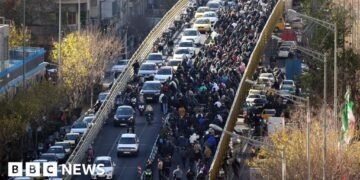























Protests and strikes over soaring inflation and the devaluation of the national currency have erupted in Iran, escalating unrest that began in Tehran. Following a significant drop in the value of the rial against the US dollar, demonstrations have spread to multiple cities, marking a critical moment in the country’s ongoing economic struggles.
This wave of protests highlights the growing discontent within Iran as citizens grapple with an increasingly difficult economic environment. The unrest reflects broader frustrations with government mismanagement and a demand for accountability, particularly as inflation continues to rise and living standards decline.
Key Developments
- Protests commenced on Sunday after shopkeepers in Tehran’s Grand Bazaar initiated a strike due to the rial’s record low against the dollar.
- Demonstrations have been recorded in various cities, including Karaj, Hamedan, Qeshm, Malard, Isfahan, Kermanshah, Shiraz, and Yazd.
- Police have deployed tear gas in response to the growing crowds.
- The Iranian government acknowledged the protests, indicating a willingness to engage in dialogue.
- President Masoud Pezeshkian has directed the interior minister to communicate with protest representatives and accepted the resignation of the central bank governor, appointing Abdolnasser Hemmati as his successor.
- Students joined the protests, chanting anti-government slogans, with some expressing support for the son of the late Shah, Mohammad Reza Pahlavi.
- The US State Department has publicly praised the protesters for their bravery.
- President Trump discussed Iran during a meeting with Israeli Prime Minister Netanyahu, remarking on Iran’s economic challenges.
Full Report
Background of the Protests
The unrest began as shopkeepers in Tehran’s Grand Bazaar staged a strike sparked by the Iranian rial’s decline. As inflation persisted, videos verified by BBC Persian showcased protests across a range of cities, signaling widespread dissatisfaction with the government’s economic policies.
Government Response
The Iranian administration responded by acknowledging the protests and asserting its commitment to listening, even to “harsh voices.” President Pezeshkian’s call for talks with what he described as protest representatives signals an attempt to quell unrest. The resignation of Central Bank Governor Mohammadreza Farzin and the appointment of Hemmati suggests a shift in economic leadership as the regime seeks to address the crisis.
Protester Demands
Amidst calls to action, university students have joined the demonstrations, openly challenging the authority of the Supreme Leader, Ayatollah Ali Khamenei. Some protesters have also voiced support for the exiled son of the late Shah, indicating a longing for monarchy amidst current discontent. Reza Pahlavi expressed solidarity with the demonstrators, insisting that the current regime’s survival exacerbates the nation’s economic plight.
International Reactions
The United States has shown support for the Iranian protesters, with the State Department commending their courage. During a crucial meeting between President Trump and Israeli Prime Minister Netanyahu,Trump commented on Iran’s economic struggles, hinting at potential military actions should Iran continue to develop its missile or nuclear programs.
Context & Previous Events
Prior to this unrest, rising inflation and hefty currency devaluations had been significant issues within Iran. The quality of life has deteriorated considerably due to years of longstanding governmental policies, leading to growing dissatisfaction among the populace. Additionally, external pressures, including potential military action discussed by the U.S. administration, add a complex layer to the situation.