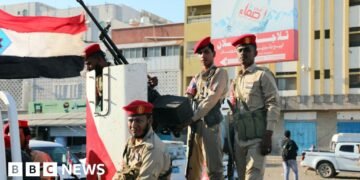























Tensions Escalate as Saudi Arabia Demands UAE Withdrawal from Yemen
Saudi Arabia has issued a demand for the United Arab Emirates (UAE) to withdraw its forces from Yemen within 24 hours, following a recent airstrike by a Saudi-led coalition that targeted what was claimed to be a weapons shipment for UAE-supported separatists in Mukalla. This development heightens existing tensions in the region and raises questions about the dynamics of the ongoing Yemeni civil war.
Why It Matters
The Saudi ultimatum reflects a significant shift in alliances within the complex landscape of Yemen’s civil war, threatening to destabilize the region further. As the conflict enters its ninth year, the internal divisions among factions, including those backed by Saudi Arabia and the UAE, jeopardize efforts to restore peace and unity in Yemen, which has already suffered from one of the world’s worst humanitarian crises.
Key Developments
- Saudi Ultimatum: Saudi Arabia’s foreign ministry demanded the UAE withdraw its forces, accusing it of pressuring separatists to launch offensives.
- Airstrike Confirmation: The Saudi-led coalition confirmed it carried out airstrikes at Mukalla targeting weapons for the Southern Transitional Council (STC).
- Emergency Declaration: Rashad al-Alimi, head of Yemen’s presidential council, declared a state of emergency for 90 days, citing a need to address threats from Houthi militants and military elements allegedly influenced by the UAE.
- UAE Response: The UAE foreign ministry rejected Saudi accusations regarding the airstrike and insisted that the shipment was not intended for Yemeni factions.
- STC’s Position: The STC leadership refuted the Saudi demand for withdrawal, emphasizing its role in combating Houthi forces.
Full Report
Saudi Arabia’s Demands
In a move that underscores escalating strains within the Saudi-led coalition, Saudi Arabia has publicly insisted on the immediate withdrawal of UAE forces from Yemen. This demand followed a coalition airstrike on Mukalla, where Saudi officials stated they targeted a weapons shipment intended for the STC, which seeks autonomy in southern Yemen. Saudi Arabia’s foreign ministry expressed concern over the UAE’s "pressure" on the STC to engage in military operations against government forces.
Airstrike and Reactions
The airstrike in Mukalla came after reports surfaced of rising tensions in the southern provinces of Hadramawt and al-Mahra, where the STC has been active. Major-General Turki al-Maliki, spokesperson for the coalition, described the weapons shipment as a direct threat to peace and stability in the region. Eyewitness accounts from the port indicated that an evacuation warning was issued before the airstrike, which resulted in the destruction of military vehicles. No casualties were reported following the attack.
Emergency Measures
Following the airstrike and subsequent demands from Saudi Arabia, Rashad al-Alimi announced a state of emergency in Yemen, asserting that this course of action was essential for national security amid what he termed "internal strife" influenced by foreign agendas. He criticized the UAE for its role and canceled the joint defense agreement previously in place.
UAE’s Denial
The UAE foreign ministry expressed surprise at the coalition’s actions, clarifying that the shipment did not contain weapons and was intended for its own forces deployed in Yemen. The ministry condemned the Saudi claims and emphasized that its relationship with other Yemeni factions remains critical to regional stability.
Context & Previous Events
Yemen has been embroiled in a civil war since 2014, following the Houthis’ ousting of the internationally recognized government in Sanaa. The situation escalated in 2015 when Saudi Arabia, joined by a coalition of Arab states, intervened to restore the government. Initially, the STC and other separatist groups allied with the government to combat Houthi advances in the south. However, in recent years, tensions have surfaced between the STC and the Yemeni government, resulting in the STC seizing control of Aden and expanding its influence in the south.
The ongoing conflict has resulted in over 150,000 fatalities and created one of the largest humanitarian crises globally as various factions vie for power and control in Yemen.






