






















Israel Recognizes Somaliland’s Independence, Sparking Global Controversy
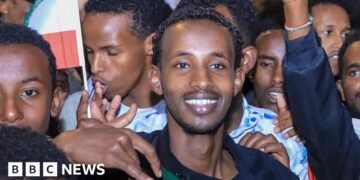
Residents in Hargeisa, the capital of Somaliland, are celebrating Israel’s recent recognition of their region as an independent nation. This historic move, however, has reignited tensions with Somalia and drew sharp criticism from various global players, including China and multiple countries across the Middle East and Africa.
Why It Matters
Israel’s recognition of Somaliland represents a significant shift in geopolitical alliances and adds complexity to the already volatile relationship between Somalia and its breakaway region. With Somaliland seeking international legitimacy after decades of relative stability, this decision has profound implications for regional security and international diplomacy.
Key Developments
- Israel’s Declaration: Israel becomes the first nation to formally recognize Somaliland as a sovereign entity, 30 years after its declaration of independence from Somalia.
- Somalia’s Reaction: The Somali government has vehemently condemned the move, claiming it undermines the nation’s territorial integrity and calling it an "existential threat."
- International Condemnation: China, Turkey, Saudi Arabia, and the African Union are among those denouncing Israel’s decision, emphasizing respect for Somalia’s sovereignty.
- Strategic Implications: Analysts suggest Israel’s recognition is driven by strategic interests in the Red Sea, especially regarding its containment of Iranian influence and potential military cooperation.
Full Report
Israel’s Recognition and Its Implications
On Friday, Israeli Prime Minister Benjamin Netanyahu informed Somaliland President Abdirahman Mohamed Abdullahi of the decision to acknowledge Somaliland’s right to self-determination. Netanyahu also outlined potential for an expanded partnership, a sentiment echoed by analysts who believe this move could provide Israel with a foothold in the Red Sea, a critical region for its national security.
In a recent paper, the Institute for National Security Studies highlighted that Somaliland’s geographic position makes it an ideal ally for Israel as it contends with regional threats, particularly from the Iran-backed Houthi rebels in Yemen.
Somalia’s Response
Somali President Hassan Sheikh Mohamud described Israel’s acknowledgment as a direct affront to his nation’s unity. His government has firmly stated that any recognition of Somaliland’s sovereignty contradicts Somalia’s claims over the territory, a view supported by a host of countries concerned about potential instability in the Horn of Africa.
Regional and Global Reactions
China has condemned the recognition, with Foreign Ministry spokesperson Lin Jian warning that no nation should support separatist movements for selfish interests. Countries like Turkey and Saudi Arabia have similarly criticized the decision, citing concerns over the integrity of Somalia.
The African Union fears that this recognition may embolden other separatist movements across Africa, potentially destabilizing the continent.
Support and Silence from Allies
Notably, key supporters of Somaliland tend to remain quiet in the face of this controversy. The United Arab Emirates, which has military operations in Somaliland, has refrained from commenting. Ethiopia has also chosen a cautious stance despite its prior agreements with Somaliland, indicating a wait-and-see approach.
Context & Previous Events
Somaliland declared independence in 1991 following the fall of military dictator Siad Barre, amid brutal civil strife that left tens of thousands dead. While not internationally recognized, it has established functioning political institutions and enjoys a degree of stability compared to the rest of Somalia, which suffers from ongoing militant violence.
Historically, Somaliland was once a British protectorate before merging with Italian Somaliland to form the Somali Republic in 1960. The region is predominantly inhabited by the Isaaq clan, which further complicates its relationship with the rest of Somalia, dominated by other clans.
As Somaliland continues to seek recognition on the world stage, Israel’s recent declaration has intensified discussions around issues of sovereignty, stability, and regional geopolitics.