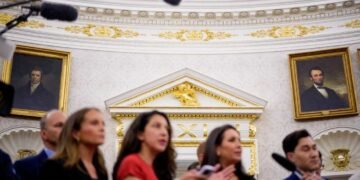























Trump’s White House Renovations Spark Debate
President Donald Trump has embarked on a series of ambitious renovations since returning to the White House, showcasing a penchant for construction that extends beyond politics. This remodeling spree has drawn mixed reactions, raising questions about the implications for historically significant sites.
Why It Matters
The ongoing renovations underscore the intersection of personal aesthetics and presidential power. As Trump shapes the very spaces that have historic significance, the changes prompt discussions about the responsibilities of public officials toward national landmarks and their legacies.
Key Developments
- Trump has made extensive changes to the Oval Office, including gilding and new tile work.
- The East Wing of the White House is undergoing a controversial demolition to make way for a new ballroom.
- A restoration project at the Kennedy Center has been branded with Trump’s name, inviting legal challenges.
- Administration officials and supporters praise the renovations, framing them as enhancements to national heritage.
Full Report
Remodeling the White House
Since resuming office, Trump has returned to his roots as a former real estate developer, approaching the presidency with a contractor’s mindset. During a recent speech, he described his construction projects as not only duties but also a source of relaxation. His renovations include dramatic updates such as gilding the Oval Office, paving the Rose Garden, and replacing existing fixtures throughout the White House.
Ambitious Projects Ahead
One of Trump’s most ambitious plans involves the extensive remodeling of the East Wing, which has recently been demolished to accommodate a ballroom. This project was initially budgeted at $200 million, but Trump indicated that costs might exceed that figure, suggesting financial transparency in his grand plans.
Kennedy Center Controversy
The Trump administration has also faced backlash for renaming sections of the Kennedy Center as “The Donald J. Trump.” This change has led to legal challenges from former congressional members who argue that such actions dilute the memorial’s original purpose. Critics express concerns that Trump’s alterations reflect a personal agenda that prioritizes his branding over national heritage.
Reactions from Various Sectors
Supporters within the administration assert that these renovations enhance the beauty of historic spaces without costing taxpayers. However, opposition voices warn of the implications of leaders treating publicly owned landmarks as personal vanity projects, challenging the boundaries of presidential authority.
Context & Previous Events
The renovation of the East Wing is the latest in a pattern of modifications that past U.S. presidents have made to personalize the White House. Notable changes in the structure’s history included the addition of a swimming pool and a basketball court, which were similarly contentious at their inception. The White House has long been a venue for reflecting the character and priorities of each president; Trump’s extensive alterations are raising the stakes in that tradition.






