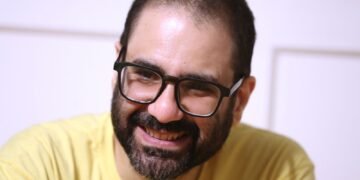























Alaa Abd El-Fattah, the British-Egyptian activist recently released from imprisonment in Egypt, has issued an unequivocal apology for past social media posts that called for violence against “Zionists.” His statements come at a time when political figures question his integrity and contemplate the revocation of his UK citizenship.
The controversy surrounding Abd El-Fattah highlights the complexities of free expression and the ramifications of historical comments in a politically charged environment. As a prominent figure in the fight for democracy and human rights, his past statements have raised concerns, with implications not only for his personal life but also for ongoing discussions about antisemitism and free speech.
Key Developments
- Alaa Abd El-Fattah returned to the UK after being imprisoned in Egypt for several years.
- Historic tweets calling for violence have resurfaced, prompting calls from several political leaders for scrutiny regarding his citizenship.
- Abd El-Fattah acknowledges the hurt his comments have caused and expresses regret.
- The UK government condemns the content of the tweets while maintaining a focus on human rights.
Full Report
Return and Apology
Alaa Abd El-Fattah, who recently returned to the UK following years of imprisonment, expressed his regret over historic social media posts that are being criticized for calling for violence against “Zionists.” In a statement, he stated that while some of his tweets have been “completely twisted,” he recognizes that others conveyed messages that are indeed “shocking and hurtful.” He emphasized, “I am shaken… several historic tweets of mine have been republished and used to question and attack my integrity.”
Political Reactions
The resurfacing of his tweets has sparked significant political backlash. Conservative leader Kemi Badenoch and other prominent figures, including shadow justice secretary Robert Jenrick and Reform UK leader Nigel Farage, have urged for a thorough review of Abd El-Fattah’s citizenship status. They have raised questions about whether he should be deported due to the content of his past statements.
Context and Regret
Abd El-Fattah remarked that many of the tweets were born out of the frustrations of youth during a time filled with regional unrest and police brutality against young people in Egypt. He labeled some comments as “online insult battles,” acknowledging his insensitivity in not considering their broader interpretations. He expressed a commitment to equality, justice, and secular democracy throughout his activism, clarifying that he has publicly rejected antisemitism and defended LGBTQ rights.
Community Support
Despite the backlash, Abd El-Fattah conveyed gratitude for the support he has received from various communities in the UK. He noted the “huge empathy” shown towards his situation, which ultimately aided in securing his freedom. The UK Foreign Office has reiterated that securing his release was a long-standing priority, while simultaneously condemning the historical tweets.
Context & Previous Events
Alaa Abd El-Fattah played a pivotal role in the 2011 Arab Spring uprising in Egypt and has been a leading voice for human rights. He has endured harassment and imprisonment since being detained in September 2019. He was sentenced to five years in prison in December 2021 on charges related to spreading false information. UN investigators have characterized his arrest as a violation of international law, and various UK governments have campaigned for his release. After his pardon earlier this year, he returned to the UK to reunite with family for the first time in over a decade.