






















Russian Oligarchs: Wealth Surges Amid Sanctions and War
In the wake of Russia’s full-scale invasion of Ukraine, a paradox has emerged: the nation’s billionaire count has reached a record high. Despite significant Western sanctions, the ultra-rich in Russia have largely remained silent supporters of President Vladimir Putin, surrendering their political influence over the past two decades.
Why It Matters
The ability of Putin to control the wealthiest sector of his country reflects broader implications for international relations and economic stability in Russia. The ongoing conflict and accompanying sanctions, which were initially aimed at destabilizing his administration, appear to have inadvertently solidified the loyalty of Russian oligarchs, further entrenching Putin’s power.
Key Developments
-
The number of billionaires in Russia surged to an all-time high of 140 in 2024, with a combined worth nearing $580 billion.
-
Billionaires collectively lost $263 billion in wealth following the invasion and Western sanctions, with their total count decreasing from 117 to 83 shortly thereafter.
-
Oleg Tinkov, a former banking tycoon, recounts being pressured to sell his bank at a fraction of its value after criticizing the war. He ultimately lost nearly $9 billion.
- Despite these setbacks, a significant percentage of billionaires are now either involved in supplying the military or benefiting from the ongoing conflict.
Full Report
The Effect of War on Wealth
The economic landscape for Russia’s elite has transformed dramatically since the onset of war. While multiple billionaires initially faced steep losses following the invasion and subsequent sanctions, the government’s wartime policies have catalyzed a resurgence in their fortunes. In the years 2023 and 2024, the Russian economy reportedly experienced growth exceeding 4% annually, largely fueled by military expenditure.
Loyalists Over Rebels
Putin’s approach has effectively marginalized dissent among Russia’s rich. Many who previously held power found their influence significantly waned, reducing their capacity to challenge the Kremlin. Examples include Oleg Tinkov, who, after voicing his opposition to the war, faced dire consequences, including the nationalization of his bank unless he resigned all ties.
Historical Context
Prior to Putin’s presidency, Russia’s oligarchs were instrumental in reshaping the country’s political and economic fabric following the Soviet Union’s collapse. Early oligarchs like Boris Berezovsky were central figures who leveraged their wealth for power. However, with the tightening grip of Putin, such influence has evaporated; Berezovsky himself faced dire consequences for his opposition.
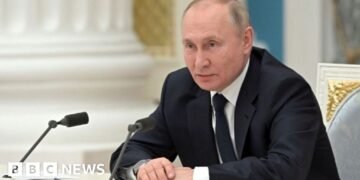
In a sobering meeting shortly after the invasion was ordered, Putin gathered Russia’s wealthiest, who appeared visibly shaken as they understood that their previous standing had diminished.
Retaliation Against Dissent
Notable figures, such as Mikhail Khodorkovsky, experienced severe repercussions for opposing the government. Khodorkovsky was imprisoned for a decade after advocating for democracy, serving as a stark warning to others about the potential costs of dissent.
The New Paradigm
While many billionaires have faced foreign sanctions that curtailed their ability to move wealth abroad, this has paradoxically reinforced their alignment with the Kremlin. Analysts note that these measures failed to uproot their loyalty; instead, they have solidified a new economy built around defense contracts and war efforts.
In contrast, the withdrawal of foreign companies due to the invasion has opened the door for Kremlin-aligned business figures to seize lucrative opportunities, thereby increasing the ranks of oligarchs who are loyal to Putin.
Context & Previous Events
Following the dissolution of the Soviet Union in the early 1990s, Russia’s oligarchs emerged as significant political players, often intertwining wealth with influence. Some, like Berezovsky, acknowledged their role in elevating Putin to power, albeit with regret. Over the years, however, Putin’s consolidation of power has marginalized these figures, driving many into silence or exile. The number of billionaires substantially dropped in the year immediately following the invasion, demonstrating the immediate economic fallout of the conflict.
As the situation develops, the dynamics between the Kremlin and Russia’s wealthy elite will continue to shape both domestic and international landscapes.