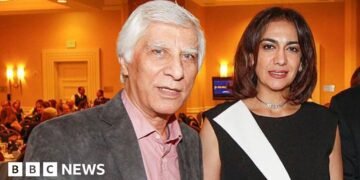























Bahram Beyzai, a revered figure in Iranian cinema and theatre, passed away at the age of 87 in the United States, prompting an outpouring of tributes from across the artistic and political spectrum. His legacy, steeped in Persian culture, is marked by his ability to navigate the turbulent waters of censorship and repression throughout his career.
Beyzai’s death represents a significant cultural loss not just for Iran, but for the global film community. As a prominent artist whose work poignantly articulated the human condition under oppressive regimes, his contributions resonate with discussions about freedom, creativity, and identity in Iran today.
- Leading Iranian newspapers have dedicated front-page coverage to mourn Beyzai’s passing, reflecting his importance in cultural discourse.
- Prominent figures, including Prince Reza Pahlavi, have acknowledged the profound impact of Beyzai’s artistry on Iranian culture.
- Despite facing bans during the 1980s, current filmmakers cite Beyzai’s work as foundational to their own storytelling and artistic vision.
- His acclaimed film, “Bashu, the Little Stranger,” recently won an award at the Venice Film Festival despite its initial ban in Iran.
Beyzai’s cinematic and theatrical works often avoided overt political messages, yet the themes he explored reflect the struggles against oppressive systems, drawing on deep-rooted Persian traditions. Beginning his career as a playwright, he captivated audiences with narratives steeped in legend and ritual, before transitioning to filmmaking in the 1970s. His creative journey straddled the reign of the Shah and the subsequent Islamic regime, both of which were vigilant against dissenting messages.
JAafar Panahi, a contemporary filmmaker, noted how Beyzai taught a generation to “stand up to oblivion,” inspiring many to challenge their circumstances through art.
As news of his passing spread, reactions poured in from artists and public figures alike. In the words of Prince Reza Pahlavi, his death marks “a great loss for the art and culture of our country.” This sentiment echoes throughout several sectors, revealing Beyzai’s influence that transcends political boundaries. Even senior officials from the current Iranian government have honored his contributions to the nation’s culture.
After leaving Iran in 2010, Beyzai continued to promote Iranian culture in the U.S., producing work that still resonated with those longing for a brighter future for their homeland. His wife, actress Mozhdeh Shamsai, expressed the deep emotional connection he maintained with Iran, stating that hearing the country’s name would evoke tears.
Beyzai’s career is notable for its span across two vastly different political landscapes in Iran, influencing generations before and after the Islamic Revolution. His most notable film from the post-revolution era, “Bashu, the Little Stranger,” faced a ban due to its sensitive themes but eventually earned critical acclaim as one of the greatest films in Iranian history, demonstrating the enduring relevance of his storytelling.