






















Myanmar’s Military Rulers Face Backlash as Controversial Election Approaches
As Myanmar’s military leaders gear up for the December 28 election, tensions are palpable amid widespread condemnation and accusations of a rigged voting process. With much of the population deeply entrenched in fear, the credibility of the election is under serious scrutiny.
Why It Matters
This election marks the first chance for Myanmar’s citizens to vote since the military coup nearly five years ago, which led to a brutal civil conflict. However, the military’s dismantling of democratic norms and suppression of dissent casts doubt on the legitimacy of the electoral process, raising questions about the future of governance and civil rights in the country.
Key Developments
- Retired Lieutenant-General Tayza Kyaw, campaigning for the Union Solidarity and Development Party (USDP), is seeking votes in Mandalay.
- The National League for Democracy (NLD) has been dissolved, with its leader, Aung San Suu Kyi, imprisoned.
- The election will occur in three phases over a month, but significant parts of the country remain embroiled in conflict.
- A recent law criminalizes criticisms of the electoral process, instilling fear among citizens to speak openly.
- Military leader Min Aung Hlaing appears optimistic about gaining legitimacy through the election.
Full Report
Election Preparations in Mandalay
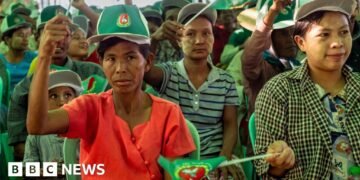
At a recent campaign rally near the Irrawaddy River in Mandalay, candidate Tayza Kyaw attempted to generate enthusiasm among a weary crowd of roughly 300-400 supporters. Despite receiving party merchandise, many attendees succumbed to the sweltering heat, while children played nearby, underscoring the dire circumstances of families affected by a recent earthquake.
Concerns About Legitimacy
This upcoming election is overshadowed by perceptions of illegitimacy, as the ruling junta has postponed the vote multiple times. Many citizens fear repercussions for expressing dissent. Despite attempts to engage the public, many individuals in Mandalay declined to share their views, maintaining that voicing opposition could lead to dire consequences.
“Everyone is afraid. Everyone has lost their humanity and their freedom,” stated one woman during a discreet conversation. She expressed her decision to abstain from voting due to the significant risks involved, characterizing the election as a facade.
Repressive Measures and Public Sentiment
New laws have been implemented to stifle dissent, with severe penalties for those who criticize the electoral process. Recent arrests and long prison sentences for activists highlight the military’s tightening grip on civil liberties.
Military Leaders’ Confidence
Despite criticism and ongoing violence, military leader Min Aung Hlaing displayed an air of confidence in the election’s potential to legitimize his rule. Support from China, including technical and financial assistance, hints at regional dynamics influencing the junta’s calculations. Although the USDP is positioned to secure victory without significant competition, internal dissatisfaction continues to plague the military leadership.
Impact of Civil War
As the civil war rages on, much of the population is weary and fearful. While some locals in Mandalay indicate they will vote, they emphasize it will not be a decision made with sincerity. With significant areas of the country still embroiled in conflict, many may find themselves unable to participate in the electoral process.
Context & Previous Events
Since the military coup nearly five years ago, Myanmar has faced severe turmoil, including civil war and widespread human rights abuses. The dissolution of the NLD and imprisonment of Aung San Suu Kyi further underlines the military’s efforts to suppress any semblance of democratic governance. The administration’s recent repressive actions reflect a broader strategy to maintain power amidst ongoing civil unrest.