






















U.S. Strikes in Nigeria Raise Questions About Targeted Groups
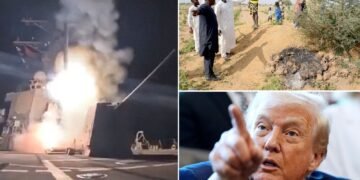
A recent series of U.S. airstrikes in Nigeria has sparked confusion and concern, particularly regarding the identities of those targeted. Despite President Donald Trump’s assertion that "ISIS terrorist scum" were the focus of the strikes, officials in Nigeria describe the details as "sketchy," prompting calls for clarification on the operation’s specifics.
Why It Matters
The airstrikes occur against a backdrop of increasing violence and instability in Nigeria, where numerous armed groups—ranging from Boko Haram to other ISIS-affiliated factions—pose challenges to national security. The U.S. military’s engagement in Nigeria not only reflects its commitment to combatting terrorism but also amplifies the delicate relationship between the two nations. Discrepancies in the reported objectives of these strikes could have significant implications for public perception and ongoing cooperation.
Key Developments
- Uncertainty Over Targets: Bola Tinubu, a special adviser to Nigeria’s president, stated that details surrounding the U.S. strikes are unclear and hinted that various groups, including Boko Haram and IS affiliates, could have been the intended targets.
- Confirmation of Locations: The U.S. strikes reportedly hit areas in Jabo, Sokoto, and Offa, Kwara regions of Nigeria on Christmas Day, stirring local fear and confusion.
- Local Reactions: Residents express anxiety over the attacks, with one local youth, Balira Sa’idu, stating the strikes have altered his wedding plans due to safety concerns.
Full Report
Overview of the Airstrikes
The U.S. airstrikes took place on December 25, targeting what President Trump identified as ISIS militants, but there remains significant ambiguity regarding who was genuinely affected. Tinubu emphasized that he hopes for clearer information soon, indicating the critical importance of transparency in such military operations.
While the intention behind the strikes might have been aimed at deterring terrorism, it has raised alarms among local populations. Residents had varying accounts of how the attacks unfolded. For instance, farmer Sanusi Madabo described witnessing a bright glow that resembled daylight, which was the aftermath of the strikes on a suspected militant camp.
Statements from U.S. Officials
Following the attack, U.S. Defense Secretary Pete Hegseth posted on social media, indicating that further information would be forthcoming. This statement adds to the urgency for clarity, especially given the complex security landscape in Nigeria.
Context & Previous Events
U.S. involvement in Nigeria has increasingly focused on combating terrorism linked to various extremist groups that have targeted both Christian and Muslim communities alike. The perceived targeting of specific religious groups, particularly in response to claims of persecution, complicates the situation. Data indicates violence against Muslim communities has occurred at rates comparable to that of Christian populations, highlighting the multifaceted nature of the conflict in Nigeria.
The ongoing dialogue about Christian persecution in Nigeria appears to have been amplified in recent months, coinciding with Trump’s outspoken support for Christian rights, which some analysts speculate could be more about domestic political strategy than the actual security situation in Nigeria.