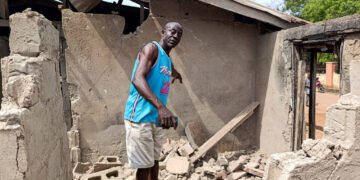























U.S. Airstrikes Target Islamic State Camp in Nigeria, Local Residents in Panic
Residents of Jabo, Nigeria were left in a state of fear after U.S. airstrikes targeted an alleged Islamic State camp nearby, marking a significant escalation in the fight against terrorism in the region. This joint operation, confirmed by both the U.S. and Nigerian governments, has raised questions about the security implications for local communities.
Why It Matters
The airstrikes not only reflect a shift in counter-terrorism strategies in Nigeria but also highlight growing collaboration between the Nigerian military and the U.S. government. With increasing reports of violence in the region, the implications for local populations are severe, as they are now caught in the crossfire of international military operations.
Key Developments
- U.S. Presidential Announcement: President Donald Trump stated the strikes were aimed at ISIS militants in northwestern Nigeria.
- Local Panic: Residents described a vivid scene of fear, with one farmer recalling the “bright red” sky during the attack.
- Government Cooperation: Nigeria’s Ministry of Foreign Affairs confirmed the strikes were based on intelligence sharing with the U.S.
- Expected Continuation: Officials anticipate further strikes as part of ongoing military efforts against terrorist threats.
Full Report
A Night of Terror
Sanusi Madabo, a 40-year-old farmer preparing for bed in his Jabo home, was startled by a loud noise reminiscent of a plane crash. Rushing outside, he was met with a blinding red light piercing the night sky, illuminating the area as if it were day. The scene left him and his neighbors gripped with panic and confusion.
"We have never experienced anything like this before," said Abubakar Sani, a resident near the explosion site. The heat from the blast was intense, as his home shook and flames soon erupted, prompting calls for better protections from the Nigerian government.
Uncertainty in the Aftermath
Though residents reported no immediate casualties, the Nigerian military did not disclose how many specific locations were targeted in the strikes. Analysts emphasized that a lack of information from both the U.S. and Nigerian governments exacerbates local fears.
Security expert Bulama Burkati noted, "What can help in dousing the tension is for the American and Nigerian governments to declare who was targeted and what has happened so far." The absence of clear communication creates an atmosphere of anxiety among the local populace.
Local Reactions
In the village of Jabo, traditional leader Aliyu Garba explained that locals rushed to the site of the attack to collect metal debris, risking injury in the process. Meanwhile, 17-year-old Balira Sa’idu, who was preparing for her wedding, expressed her distress, saying, "The strike has changed everything. My family is afraid, and I don’t even know if it is safe to continue with the wedding plan here."
Context & Previous Events
The recent airstrikes stem from a complex history of violence involving various militant groups in Nigeria. Analysts have pointed to the emergence of the Lakurawa group, which reportedly consists mainly of foreign fighters from the Sahel region and may have connections to ISIS. Previously, the Nigerian government had announced its presence in 2022, amidst ongoing tensions characterized by attacks targeting both Christians and Muslims in the country.
As the situation develops, local communities remain vigilant, grappling with the uncertainties brought about by international military interventions in their homeland.






