






















Pope’s Stance on Immigration Sparks Tensions with Conservative Catholics
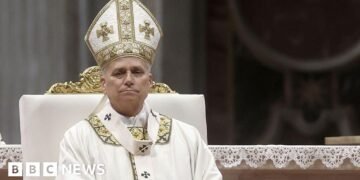
The recently appointed Pope Leo XIV has drawn sharp criticism from conservative Catholic factions, particularly supporters of former President Donald Trump. The Pope’s vocal opposition to the Trump administration’s immigration policies has created a rift that challenges traditional Church alignment with political power in America, particularly among its significant Catholic constituency.
Why It Matters
With one in five Americans identifying as Catholic, the Church exercises considerable influence over public life and political dynamics in the U.S. The clash between papal teachings on immigration and the Trump administration’s policies exposes a growing divide among American Catholics and raises questions about the role of religious authority in political discourse.
Key Developments
- Pope Leo XIV has criticized U.S. immigration policies, calling for “deep reflection” on the treatment of migrants.
- The U.S. Conference of Catholic Bishops (USCCB) issued a rare “Special Message,” expressing concern over mass deportations and a “climate of fear.”
- Conservative podcaster Jesse Romero voiced frustration, arguing that the Pope should focus on spiritual matters rather than governmental policies.
- Current U.S. immigration policies have sparked significant discourse among American Catholics, particularly regarding adherence to Catholic teachings on human dignity and compassion for migrants.
Full Report
Conservative Pushback
Many conservative Catholics, including notable figures such as podcaster Jesse Romero, disapprove of Pope Leo XIV’s stance, urging him to remain focused on spiritual guidance rather than political matters. Romero expressed anger over the criticism directed at the former administration’s immigration policies, asserting that the Pope “has no authority over the government.”
Papal Concerns on Immigration
Pope Leo XIV has actively called attention to the treatment of migrants in the U.S., referencing the Gospel of Matthew and underscoring the moral obligation to honor the dignity of newcomers. His message resonated with the USCCB’s recent statement, emphasizing the need for compassion and condemning indiscriminate mass deportations, which the bishops deemed dehumanizing.
Political Implications
The tension between conservative Catholics and the papacy highlights significant political ramifications. White House officials, including border czar Tom Homan, have publicly rejected the Pope’s assertions, suggesting that church leaders should address internal issues rather than engage in political debates. Meanwhile, a considerable percentage of white Catholics continue to support Trump’s immigration policies, indicating a disconnect between governmental actions and the Church’s position on human dignity.
Grassroots Reactions
Responses from the Catholic community reflect diverse opinions on immigration issues. While many conservative Catholics align with the government’s stance, others advocate for a more compassionate approach. For instance, Jeanne Rattenbury, a parishioner in Chicago, participated in a Mass outside an ICE detention center to show solidarity with those facing deportation. Rattenbury’s actions exemplify a commitment to upholding the Church’s teachings on human dignity, which may stand in stark contrast to current policies.
Context & Previous Events
The recent papal conclave in May marked a turning point for the Vatican in terms of American politics, with many conservatives hoping for a pope who would align more closely with Trump’s policies. Instead, the appointment of Pope Leo XIV has reignited debates over immigration and social justice, marking a significant shift from his predecessor, Pope Francis. The USCCB’s issuance of a “Special Message” is significant, as it represents a rare collective response to immigration policy in the past decade.