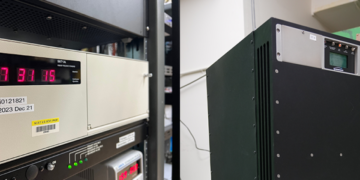























Atomic Clock Power Outage Causes Minor Delay in U.S. Timekeeping
The U.S. government’s official timekeeping experienced a brief disruption last week due to a power outage at the National Institute of Standards and Technology (NIST) laboratory in Boulder, Colorado. A severe windstorm knocked out power, followed by a failure of a backup generator, resulting in a 4.8 microsecond delay in the calculated time.
Why It Matters
Accurate timekeeping is essential for a variety of functions, ranging from telecommunications to GPS navigation. While 4.8 microseconds may seem negligible in everyday contexts, it could potentially have significant implications for critical infrastructure and systems that rely heavily on precise timing.
Key Developments
- Power was lost at the NIST facility due to a windstorm and subsequent generator failure.
- The calculated loss resulted in NIST UTC being 4.8 microseconds slower than its intended measurement.
- All atomic clocks at NIST continued to function using battery backups, but connectivity issues affected NIST’s measurement systems.
- Staff were able to restore power with a diesel generator put on standby.
- The delay is considered minor for the general public but could affect specialized users in critical sectors.
Full Report
Details of the Outage
On Wednesday, a destructive windstorm interrupted power at NIST’s Boulder laboratory, which houses more than a dozen atomic clocks. This facility is responsible for setting the official U.S. time, known as NIST UTC. According to NIST spokesperson Rebecca Jacobson, the lapse caused NIST UTC to lag by 4.8 microseconds, a fraction of a second so brief that it takes a human approximately 350,000 microseconds to blink.
Despite the power setback, NIST’s atomic clocks, including cesium beam clocks and hydrogen masers, continued to operate due to their battery backup systems. However, connectivity between these timekeeping devices and NIST’s measurement systems failed, resulting in the time discrepancy.
Restoration Efforts
NIST research physicist Jeff Sherman reported that some staff members remained on-site following the storm and were instrumental in restoring power via a diesel generator that had been kept in reserve. By Saturday evening, power was fully restored, and teams began evaluating the situation to correct the 4.8 microsecond delay.
Implications of the Drift
Sherman noted that while a four-microsecond deviation might seem both significant and trivial simultaneously, its broader implications depend on the user. For the general public, this delay is unlikely to be noticed, but for critical infrastructure related to telecommunications and GPS, the accuracy of timing is crucial. NIST has informed its "high-end" users about the disruption and provided access to alternative timekeeping networks.
Context & Previous Events
Since 2007, the official time of the United States has been determined under the supervision of the Commerce Secretary, who oversees NIST, in partnership with the U.S. Navy. The national time standard, known as NIST UTC, is part of a global time system in which multiple countries contribute their own measurements.






