






















Myanmar’s Civilian Population Faces Dire Choices as Military Intensifies Offensive
The ongoing military offensive in Myanmar has forced thousands of civilians to flee their homes, prompting a humanitarian crisis in the country. As the junta escalates airstrikes and ground operations ahead of elections later this month, many fear for their lives and criticize the legitimacy of the electoral process.
Why It Matters
The situation in Myanmar highlights the broader implications of military governance on civilian life, as well as the international community’s struggle to address human rights violations. With fears of election fraud and military repression, the upcoming elections are increasingly viewed as a sham by both citizens and rebel groups.
Key Developments
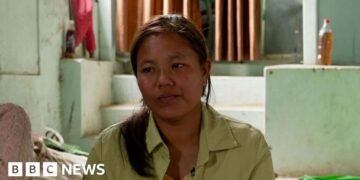
- Civilian Iang Za Kim fled her village after airstrikes sparked terror among residents.
- Many displaced persons have sought refuge across the border in India, where local villagers are providing aid.
- The junta’s recent military offensive has been described as the most severe in over three years, with targets including hospitals and schools.
- The political landscape is fractured, with the National League for Democracy, once the dominant party, currently excluded from the electoral process.
- Rebel groups express skepticism regarding the legitimacy of the upcoming elections, which could prolong military rule.
Full Report
Civilian Impact
Iang Za Kim, a villager from K-Haimual in Chin State, recounted the fear and chaos faced by her community when military jets flew overhead, prompting her to flee into the jungle. “We thought the junta’s planes would bomb us too,” she said, expressing the sheer terror that led her and others to abandon their homes. Alongside her, multiple women shared their trauma, tears marking the emotional toll of their displacement.
The fear of forced participation in the upcoming elections has driven many residents to escape. “If we are caught and refuse to vote, they will put us in jail and torture us,” she explained. This sentiment echoes throughout the region, where civilians actively attempt to evade the military’s reach.
Humanitarian Crisis
Refugees from the ongoing military campaign are now sheltering in makeshift conditions in neighboring Mizoram, India. Local residents have stepped in to provide food and essentials, but the temporary shelters lack sufficient resources. Eighty-year-old Ral Uk Thang, who has also been displaced, spoke of the cruelty of the junta, recounting how militia forces have arrested, tortured, and even executed villagers.
Violent Military Tactics
The junta has intensified aerial bombardments, targeting civilian structures, including a hospital in Rakhine State, resulting in numerous casualties. Reports indicate that at least 30 people were killed in a recent attack, with many more injured. The Chin Human Rights Organization has documented the destruction of schools and churches in the area, amplifying concerns about the safety of civilians.
Election Legitimacy Called into Question
As the military prepares for elections scheduled for December 28, many residents and opposition groups, including the Chin National Front, argue that the voting process is largely a façade. “This election is only being held to prolong military dictatorship,” said Sui Khar, Vice Chairman of the Chin National Front. The National League for Democracy party, led by Aung San Suu Kyi, has been effectively sidelined, with most of its leadership imprisoned.
Devastating Consequences for Fighters
On the frontlines, young rebel fighters are paying a heavy price. Many are severely injured, with reports indicating a significant number of casualties among combatants. Eighteen-year-old Abel, who lost a leg fighting against the junta, articulated a powerful hope for future generations, stating, “Even if I have to give up my life, I’m happy to make the sacrifice.”
Context & Previous Events
Since the military coup in February 2021, Myanmar has faced escalating violence and repression. Civilians are regularly targeted as the junta seeks to suppress armed insurrections. The upcoming elections, unrecognized by much of the international community, are marred by allegations of deceit and a lack of true representation, as significant political opposition remains in jail.