






















Australia Initiates National Gun Buyback in Response to Bondi Beach Shootings
Australia is launching a national gun buyback program following the tragic shootings at Bondi Beach that left 15 people dead. The initiative aims to tackle gun violence by removing firearms from circulation, amidst rising concerns over antisemitism and extremist violence in the country.
Why It Matters
The Bondi Beach shooting, targeting a Hanukkah celebration, underscores the urgent need for reforms in Australia’s gun laws. With an estimated four million firearms in the nation, the government’s decisive action signals a commitment to enhance public safety and address the growing threat of domestic terrorism and hate crimes.
Key Developments
- Prime Minister Anthony Albanese announced a national gun buyback scheme inspired by past reforms following the 1996 Port Arthur massacre.
- New South Wales Premier Chris Minns stated that the state government will introduce tough new gun control measures next week.
- Authorities have boosted policing efforts nationwide to avert further violence in the wake of the Bondi attack.
- Rabbi Yosef Eichenblatt from Sydney’s Central Synagogue highlighted ongoing fears within the Jewish community about safety and acceptance in Australia.
- The gunman responsible for the Bondi Beach attack held a firearms license and owned six registered guns.
Full Report
In response to the Bondi Beach shooting, where two gunmen opened fire during Hanukkah celebrations, Prime Minister Albanese announced a national gun buyback scheme aimed at reducing the number of firearms in the country. This program draws parallels to Australia’s previous gun reforms initiated after the Port Arthur massacre in 1996, which saw the surrender of approximately 640,000 prohibited firearms.
In a press conference, Albanese noted, “Australia’s gun laws were last substantially reformed in the wake of the Port Arthur tragedy. The terrible events at Bondi show we need to get more guns off our streets.” He emphasized the need to tighten gun control regulations and limit individual firearm ownership to four guns per person.
New South Wales Premier Chris Minns announced that the state government would be recalled next week to enact significant reforms, including stricter licensing requirements and restricted access to high-risk weaponry. These measures are intended to ensure that individuals like the Bondi shooter, who held multiple firearms, are not able to legally obtain dangerous weapons.
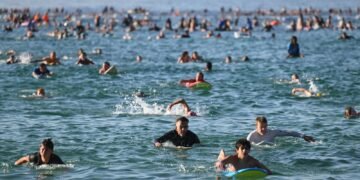
As the community mourns, tributes have been held at Bondi Beach, where numbers of swimmers and surfers gathered to honor the victims. Rabbi Yosef Eichenblatt described the profound grief felt within the Jewish community, mentioning the public calls for violence that have heightened concerns about safety. “Over the past two years, there’s been a lot of people who have been questioning whether we’re still welcome here in Australia,” he said.
Amidst these developments, Ahmed al Ahmed, who intervened during the attack, received financial support from an online fundraiser, recognizing his bravery in the face of violence. The government has also been pressured to address rising antisemitism linked to the ongoing conflict in Gaza, with Albanese reaffirming his commitment to combating hate speech.
Context & Previous Events
The Australian government’s response to gun violence has evolved significantly following the 1996 Port Arthur massacre, which catalyzed extensive gun control reforms. After that event, Australia secured the surrender of a large number of prohibited firearms and established a compensation program for owners, which highlights the nation’s long-standing commitment to public safety through strict gun laws.






