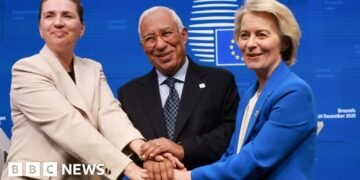























EU Leaders Agree to €90 Billion Loan for Ukraine Amid Ongoing Conflict
European Union leaders have reached a significant agreement to offer Ukraine a €90 billion ($105 billion) loan, addressing urgent military and economic needs over the next two years. This development comes after lengthy discussions during an EU summit in Brussels, emphasizing the bloc’s commitment to supporting Ukraine amid its ongoing conflict with Russia.
Why It Matters
This loan agreement is crucial as Ukraine faces a potential cash shortfall as early as April 2024. With rising pressures from escalating military needs and economic instability, securing financial aid from the EU is essential for Ukraine to maintain its defense and continue operations. The decision highlights the EU’s collective resolve to assist Ukraine despite challenges in reaching consensus on the use of frozen Russian assets.
Key Developments
- Loan Agreement: EU leaders confirmed a €90 billion loan, backed by the bloc’s common budget.
- Frozen Russian Assets Proposal: Ukrainian President Volodymyr Zelensky had proposed using €200 billion in frozen Russian funds, but Belgium’s demands for liability guarantees hindered consensus.
- Macron’s Comments: French President Emmanuel Macron suggested it might be beneficial for Europe to reinitiate dialogue with Russian President Vladimir Putin.
- Financial Urgency: Ukraine’s cash reserves are depleting; without new funding by spring, operations, including drone production, could be severely affected.
- Diplomacy in Action: US and Russian representatives are scheduled to meet in Miami for peace plan discussions while Zelensky seeks additional guarantees from the United States.
Full Report
Loan Details and EU Unity
The agreement to provide Ukraine with a €90 billion loan emerged following over a day of discussions aimed at addressing the country’s immediate financial requirements. EU chief Antonio Costa proclaimed the deal a successful commitment from the bloc, noting that this financial package represents a united front amid challenges, as emphasized by Belgian Prime Minister Bart De Wever.
Despite Russia’s warning against using their frozen assets, which was a point of contention among EU countries, the decision was framed as a necessary step to uphold unity and support for Ukraine. German Chancellor Friedrich Merz voiced that this outcome sends a clear message to Moscow regarding the EU’s resolve.
Ongoing Diplomatic Efforts
In a related diplomatic push, US President Donald Trump is reportedly advocating for swift negotiations to conclude the ongoing conflict. US and Russian officials are set to convene in Miami, where Kremlin envoy Kirill Dmitriev will engage with Trump’s representatives. Meanwhile, Zelensky announced that Ukrainian and US delegations would participate in talks over the weekend in the United States, aiming for clearer assurances to bolster Ukraine’s defense against further Russian incursions.
Context & Previous Events
The EU’s €90 billion loan illustrates the ongoing financial assistance required for Ukraine as it navigates the battle against Russian aggression. Previous discussions had centered around the use of frozen assets, particularly where Belgian authorities had raised concerns about liability sharing. As the conflict persists, the need for robust international support to Ukraine grows increasingly urgent, coinciding with evolving diplomatic dialogues involving major global powers.