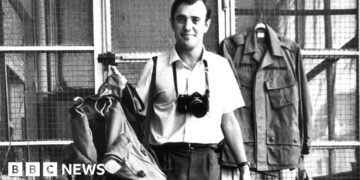























Pulitzer Prize-Winning Journalist Peter Arnett Passes Away at 91
Pulitzer Prize-winning journalist and renowned war correspondent Peter Arnett has died at the age of 91, as reported by various U.S. media outlets. Celebrated for his extensive coverage of multiple conflicts, including the Vietnam and Gulf Wars, Arnett’s work has made lasting contributions to the field of journalism.
Why It Matters
Arnett’s reporting not only shaped public perceptions of the Vietnam War and the Gulf War but also established him as a pivotal figure in the evolution of war journalism. His commitment to reporting the truth during some of the most tumultuous times in recent history serves as an enduring example for both aspiring journalists and historians.
Key Developments
- Arnett died surrounded by family and friends in California, while receiving hospice care for prostate cancer.
- He began his career with the Associated Press in Vietnam in 1962 and remained until the war concluded in 1975.
- His fame surged while working for CNN during the first Gulf War, where he reported live from Baghdad amidst U.S. airstrikes.
- In 1997, Arnett became the first Western journalist to interview Osama Bin Laden at a secret location in Afghanistan.
- After being dismissed from NBC for his comments on Iraqi state television, he was quickly hired by the Daily Mirror.
Full Report
A Career of Impact
Born in 1934 in Riverton, New Zealand, Peter Arnett later became an American citizen and had resided in Southern California since 2014. He gained acclaim for his fearless reporting style and striking storytelling ability. In a 2013 lecture, Arnett recounted harrowing experiences, such as witnessing a soldier being shot in close proximity while on assignment in Vietnam, which highlighted the dangers faced by war correspondents.
Notable Reporting and Legacy
Arnett’s distinguished career included significant reporting from various global conflict zones, such as Iraq and El Salvador. His work garnered widespread recognition; he won the international reporting prize from the Associated Press for his Vietnam War coverage in 1996. His tenure at CNN during the Gulf War established him as a familiar name, particularly after his dramatic live broadcasts from Baghdad, which were often interrupted by air raid sirens.
His interaction with key figures such as Saddam Hussein was noteworthy, where he exhibited tenacity in his questioning. Arnett’s groundbreaking interview with Osama Bin Laden preceded the September 11 attacks, revealing insights into Bin Laden’s intentions at the time.
Despite facing controversy, including his dismissal from NBC for his critical remarks on U.S. military strategy, Arnett remained committed to truthful reporting, as reflected in his statements following his job loss. His legacy will undoubtedly influence future generations of journalists and historians.
Context & Previous Events
Arnett first joined the Associated Press as a correspondent in Vietnam and continued until the war’s conclusion in 1975. His move to CNN in the 1980s solidified his standing as a prominent journalist, especially during the first Gulf War. The 1997 Bin Laden interview marked a significant moment in journalistic history, setting the stage for future global events.