






















U.S. Approves $10 Billion Arms Sale to Taiwan, Heightening Tensions with China
In a significant move that is poised to escalate tensions in U.S.-China relations, the Biden administration has announced an extensive arms sales package to Taiwan exceeding $10 billion. This initiative, aimed at bolstering Taiwan’s defense capabilities, includes advanced military technology such as medium-range missiles and drones.
Why It Matters
The arms sale underscores the ongoing geopolitical struggle between the United States and China, particularly regarding Taiwan’s status. By enhancing Taiwan’s defense, the U.S. aims to reinforce its commitment to the island’s security amid rising concerns over China’s military ambitions in the region. This development prompts significant implications for regional stability and U.S.-China diplomatic relations.
Key Developments
- The military assistance package encompasses 82 high-mobility artillery rocket systems (HIMARS) and 420 Army Tactical Missile Systems (ATACMS), valued over $4 billion.
- Included in the sale are 60 self-propelled howitzer systems worth more than $4 billion, alongside drones costing over $1 billion.
- The State Department emphasized that these sales support U.S. national security interests while aiding Taiwan in modernizing its military forces.
- Taiwan’s government announced an increase in defense spending to 3.3% of its GDP for the forthcoming year, with a goal of 5% by 2030.
- The Chinese government has formally condemned the arms package, labeling it a provocative action.
Full Report
Arms Sales Announcement
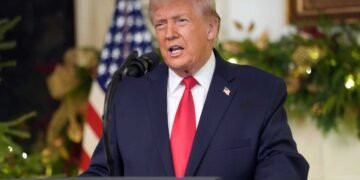
On December 17, 2025, during a nationally televised address, President Donald Trump revealed the arms sales package. While his speech focused on domestic affairs, the State Department issued detailed statements outlining the military agreements, which aim to assist Taiwan in developing a more credible defensive capability.
Taiwan’s Response
Taiwan’s Defense Ministry expressed gratitude for the U.S. support, stating that the arms sales would significantly enhance its self-defense capabilities. The ministry remarked that bolstering its defense is vital for maintaining regional peace and stability.
Taiwan’s Foreign Minister, Lin Chia-lung, echoed this sentiment, thanking the U.S. for reinforcing Taiwan’s defense capabilities, crucial for deterring any potential conflicts in the Taiwan Strait.
Increased Defense Spending
In the wake of the arms sales announcement, Taiwan’s government pledged to ramp up its defense budget significantly. President Lai Ching-te disclosed a special budget of $40 billion aimed at arms procurement, which includes initiatives for developing an advanced air defense system named Taiwan Dome, designed for high-level detection and interception. This budget is set to be enacted over eight years, from 2026 to 2033.
Legislative Support
The arms sales package was previewed in recently passed legislation that Trump is anticipated to sign soon. This legislative action reiterates the U.S. commitment to assisting Taiwan, despite pushback from some sectors of Taiwanese society and its opposition Kuomintang (KMT) party regarding the proposed defense spending levels.
China’s Reaction
China’s embassy in Washington vehemently criticized the arms sales package, asserting it unfairly targets China and exacerbates regional tension. The embassy has expressed strong opposition and condemned the U.S. for what it labels as undermining China’s sovereignty and international standing.
Context & Previous Events
The legal framework governing U.S. military assistance to Taiwan originates from federal law requiring support for Taiwan’s self-defense capabilities. Relations between the U.S. and China have fluctuated throughout Trump’s administration, often centered around trade disputes and the geopolitical dynamics concerning Taiwan. The National Defense Authorization Act, which includes the recent arms sales, has also drawn ire from Beijing, reflecting the heightened sensitivity of U.S. policy toward Taiwan as Beijing continues to assert its claim over the island.






