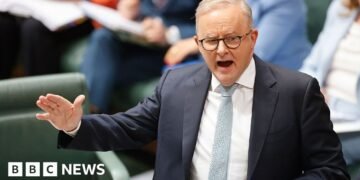























Australia Moves to Combat Hate Speech After Bondi Beach Shooting
As Australia grapples with the aftermath of a tragic shooting at a Jewish festival in Bondi Beach, Prime Minister Anthony Albanese has announced a decisive plan to combat hate speech within the nation. This initiative comes in response to the assault that left fifteen people dead during the first day of Hanukkah celebrations, marking a significant moment in Australia’s struggle against rising antisemitism.
Why It Matters
This development is critical not only for the safety and security of Jewish Australians but also reflects a growing concern over hate speech and radicalization in the country. The new laws aim to foster a more inclusive society while addressing the urgent need for accountability in speech related to hate and violence. Albanese’s commitment represents an effort to bridge divides and ensure that all citizens feel safe and respected.
Key Developments
- Albanese’s government will implement new laws targeting individuals who incite hate, division, and radicalization.
- Home Affairs Minister Tony Burke will gain enhanced authority to revoke or deny visas for those who disseminate hate speech.
- A task force will be established to create educational programs aimed at preventing and addressing antisemitism.
- New penalties will be introduced for religious leaders who instigate violence and a federal offense of "aggravated hate speech" will be recognized.
- The term "hate" will be included as an aggravating factor in sentencing for online harassment and threats.
Full Report
Following the devastating shooting incident, Albanese expressed his commitment to ensuring that every Jewish Australian feels "safe, valued, and respected." During a press conference in Canberra, he condemned the attack, citing that the perpetrators were motivated by extremist ideologies like those of ISIS. He affirmed that Australians have countered the violence with empathy and solidarity.
Albanese also reiterated his government’s intention to fully adopt the recommendations made by antisemitism envoy Jillian Segal in a report released earlier this year. This report outlined measures including potential monitoring of universities and arts organizations, which has raised concerns regarding free speech. Critics argue that such actions could inhibit pro-Palestinian protests by thinning the lines on freedom of expression.
Home Affairs Minister Burke remarked on the need to recalibrate the thresholds for acceptable speech in Australia. He acknowledged the exploitation of previously tolerated language that dehumanizes individuals without crossing into violence. This re-evaluation aims to tighten controls over hate speech while balancing the country’s values of free speech.
In light of increased antisemitic sentiment following the October attack on Israel by Hamas, Albanese recognized the responsibilities of his administration, admitting potential shortcomings in addressing these issues sooner. He emphasized the pressing need for national unity, stating that this moment calls for collective action rather than further division.
Context & Previous Events
The recent shooting at Bondi Beach is the latest in a series of troubling incidents connected to rising antisemitism in Australia. Albanese’s government faced criticism from the Jewish community for not doing enough to prevent such acts following the escalation of violence related to the Israel-Palestine conflict. The scrutiny intensified after the introduction of Segal’s report, highlighting the complexities surrounding free speech in the context of combating hate and fostering safety for all communities.