






















EU Leaders Discuss Loaning Frozen Russian Assets to Ukraine Amid Financial Crisis
The European Union is at a crucial juncture as leaders gather in Brussels to decide whether to loan billions of euros from frozen Russian assets to support Ukraine’s military and economic needs. With the urgency mounting amid Ukraine’s financial constraints, the decision carries significant implications for both the conflict and the broader European security landscape.
Why It Matters
As Ukraine faces an imminent financial crisis, the potential release of approximately €90 billion from Russian assets could provide crucial support. This decision not only underscores Europe’s commitment to Ukraine amid the ongoing war but also raises questions about the legal and political ramifications of using the frozen funds. The outcome of these talks could set a precedent for future EU actions and responses to geopolitical crises.
Key Developments
- EU Summit Begins: Leaders convene in Brussels for a pivotal two-day summit focused on Ukraine’s funding needs.
- Frozen Assets Proposal: Discussion centers around loaning roughly €90 billion to Ukraine from €210 billion in Russian assets held in the EU.
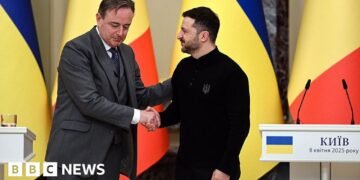
- Belgium’s Stance: Belgian Prime Minister Bart De Wever remains skeptical about the proposal, advocating caution regarding the national funds.
- Legal Concerns: Some EU leaders express doubts about the legal basis for using the assets, with Hungary explicitly opposing the plan.
- Financial Guarantees: Several countries are willing to provide financial assurances if the assets are allocated to Ukraine, but Belgium demands clarity on the financial implications.
- Ukraine’s Leadership Involvement: President Volodymyr Zelensky is expected to attend the summit to advocate for Ukraine’s needs directly.
Full Report
Summit Focuses on Urgent Financial Needs
The European Commission has proposed loaning about €90 billion to Ukraine over the next two years, believing this funding will help the country remain resilient against ongoing Russian aggression. The plan aims to utilize a significant portion of the €210 billion of Russian assets, primarily held by the financial services firm Euroclear in Belgium.
Belgium’s Resistance
Despite the proposal, Prime Minister De Wever has articulated strong reservations regarding the potential loan, with Defence Minister Theo Francken labeling it a considerable risk. Belgium’s hesitance stems from concerns about the legal implications and the possibility of having to return funds to Russia should a court rule in its favor. The Belgian government’s apprehensions reflect broader fears within the EU about the ramifications of tapping into these frozen assets.
Risk of Legal Challenges
Russia has actively opposed the EU’s plans, taking legal action against Euroclear in a Moscow court to reclaim its assets. EU officials are confident in the legal framework supporting the loan proposal; however, skepticism exists among some nations. Hungary’s Prime Minister Viktor Orban has expressed a firm stance against any EU financial support to Ukraine, complicating the necessary consensus amongst member states.
Other Options on the Table
Alternative strategies are being considered, including the European Union borrowing funds on the international market. However, this approach necessitates unanimous support, further complicating the decision-making process.
Striving for Compromise
European officials maintain that they are working to address Belgium’s concerns credibly. There is a collective aim to ensure that appropriate safeguards are in place and that the legal basis for any action taken is solid. Despite the challenges, several EU nations are optimistic about finding a feasible solution to lend support to Ukraine.
Context & Previous Events
This summit arrives at a defining moment, following ongoing discussions initiated by U.S. President Donald Trump, who noted that a resolution to the war is within reach. The conflict began with Russia’s full-scale invasion of Ukraine in February 2022, leading to multiple rounds of international sanctions against Moscow. Until now, the EU has provided Ukraine with the interest accrued from the frozen assets rather than direct access to the funds.
In conclusion, as EU leaders deliberate on their next steps, the outcome of this summit will likely shape both Ukraine’s immediate future and the continent’s long-term strategies in addressing geopolitical threats and crises.






