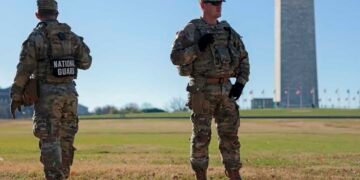























National Guard Troops to Stay as Appeals Court Upholds Deployment in D.C.
Federal appeals court ruling allows National Guard troops to remain in Washington, D.C. while legal challenges regarding their deployment proceed. This decision marks a significant moment in the ongoing debate surrounding military presence in urban areas.
Why It Matters
This ruling not only highlights the complicated legal framework surrounding military deployments but also draws attention to the implications of federal authority in state matters. With President Trump’s administration exerting control over National Guard deployments, the case raises questions about governance, legality, and the precedent it sets for future interventions.
Key Developments
- A Federal Appeals Court for Washington, D.C. has ruled that National Guard troops can continue their mission in the district pending legal review of their deployment.
- The court’s decision comes after President Trump deployed over 2,000 troops from various Republican-led states to support local law enforcement since August.
- This deployment has been under scrutiny following a targeted attack that killed one Guardsman and injured another from West Virginia.
- The ruling overturns a lower court order that mandated troop withdrawal from the city.
- The judges indicated that the unique federal status of Washington, D.C. allows the President significant control over troop movements.
- The court is expected to address the constitutionality of utilizing out-of-state troops in other jurisdictions, which the judges described as "constitutionally troubling."
- Additionally, the Ninth Circuit recently mandated the removal of troops from Los Angeles, complicating the administration’s broader deployment strategy.
Full Report
National Guard Presence in D.C.
The appeals court’s ruling permits National Guard troops to remain stationed in Washington, D.C., while a panel evaluates the legal parameters of President Trump’s deployment orders. Over 2,000 troops, a mix from the District and at least 11 Republican-led states, have been mobilized in response to heightened security concerns. This reflects a growing trend of military involvement in urban policing, particularly in cities with Democratic leadership.
Legal Context
While the court has expressed confidence that the Trump administration is likely to prevail in defending the deployment’s legality, concerns linger regarding the deployment of troops from one state to another lacking gubernatorial consent. Such actions could pose questions about the constitutional responsibilities and boundaries of the federal government.
Developments in Other Cities
This ruling comes on the heels of a Ninth Circuit decision requiring the withdrawal of National Guard troops from Los Angeles. The federal court upheld a prior ruling that sought to terminate Trump’s deployment in California, which saw more than 4,000 troops initially sent to city streets amid widespread protests. Although troop numbers have dwindled, legal battles continue over the federalization of local guards.
Context & Previous Events
In June 2025, President Trump ordered the California National Guard to assist local police due to unrest in Los Angeles, a move made against Governor Gavin Newsom’s wishes. Subsequently, limits on troop numbers and extensions of federal control have fueled ongoing judicial scrutiny. The situation in Washington, D.C. and Los Angeles reflects a pattern of military deployment that is becoming increasingly contested in U.S. courts.






