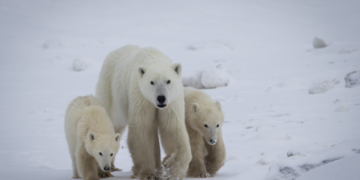























Mother Polar Bear Adopts Unrelated Cub in Rare Demonstration of Compassion
In a remarkable and rare occurrence, researchers in northern Canada observed a mother polar bear adopting a cub that is not her biological offspring. This event highlights both the unique behaviors of polar bears and the challenges they face amid changing environmental conditions.
Why It Matters
Polar bear populations are currently under significant stress due to climate change, which affects their habitat and survival rates. The adoption of a non-biological cub could enhance the chances of individual bears surviving into adulthood, making such behaviors critical in the fight against species decline.
Key Developments
- Researchers noted the unusual adoption during the annual polar bear migration near Churchill, Manitoba.
- The mother bear, observed with her two cubs, had previously been captured in the spring with one tagged cub.
- It’s only the thirteenth documented case of bear adoptions in a study encompassing nearly 4,600 bears over nearly five decades.
- Scientists are investigating the fate of the biological mother of the newly adopted cub using genetic samples.
- The health of the adopted cubs is reported to be stable, and they are expected to stay with their mother until about two-and-a-half years old.
Full Report
Unusual Observations
This fall, researchers from Polar Bears International encountered an exceptional situation when they witnessed a five-year-old mother bear caring for two cubs during the migration along the Western Hudson Bay. The original cub was tagged for study after being captured in spring, while the newly adopted cub was untagged, indicating its different lineage.
Research Insights
Alyssa McCall, a scientist affiliated with Polar Bears International, noted the rarity of such adoption events. “We don’t really know why it happens…but we know it doesn’t happen often at all,” she shared in a video statement, emphasizing the biological and environmental complexities facing these bears.
Climate Context
Evan Richardson, a scientist with Environment and Climate Change Canada, highlighted the necessity of familial support in the bear population, especially in the wake of climate-induced challenges. He mentioned that while wild polar bears face approximately a 50% survival rate into adulthood, maternal care significantly increases the odds of survival for cubs.
Future Prospects
The cubs are expected to remain with their mother as they learn essential survival skills, such as hunting seals. Richardson expressed optimism about the resilience of polar bears, stating, “It’s just nice to know that the bears are looking out for each other.”
Context & Previous Events
This unique adoption case is notable as it marks only the 13th recorded instance in an extensive study spanning nearly five decades, during which researchers have tracked over 4,600 polar bears in the region.






