






















The Rapid Support Forces (RSF) in Sudan are reportedly engaged in a systematic campaign to conceal mass killings in el-Fasher, utilizing mass burials and cremation tactics, according to a recent report by Yale University’s Humanitarian Research Lab (HRL). The findings have led to renewed international scrutiny amid escalating violence in the region.
Such actions highlight the dire humanitarian impact of the ongoing civil conflict in Sudan, underscoring alarm bells regarding violations against civilians in a country already grappling with significant instability. The situation has drawn condemnation globally, amplifying calls for accountability while exposing the grim reality facing thousands trapped in the conflict.
Key Developments
- Yale’s HRL report indicates the RSF disposed of tens of thousands of bodies to erase evidence of mass killings in el-Fasher.
- The RSF leader, Gen. Mohamed Hamdan Dagalo, acknowledged some soldier violations but denied ethnic motivations behind the killings.
- Satellite imagery from the HRL shows clusters of disposed bodies, signifying ongoing systematic efforts to cover up evidence.
- The UN describes the conflict as a catastrophic humanitarian disaster, with over 250,000 civilians trapped in el-Fasher.
- RSF has established control in el-Fasher and consolidated its power in the region, establishing a parallel government in Nyala.
Full Report
Mass Disposal Campaign
The Yale HRL has released findings revealing that the RSF has been actively involved in a “multi-week campaign” to destroy evidence of its violent actions. Analysis of updated satellite images has shown a staggering increase in body disposal sites in the aftermath of the RSF’s takeover of el-Fasher, indicating a calculated effort to conceal mass killings.
Reactions from RSF Leadership
Despite the overwhelming evidence, there has been no official response from RSF regarding the HRL’s findings. However, Gen. Dagalo previously admitted to some misconduct among his troops during the conflict. This concession seems insufficient in light of the grave accusations leveled against the group.
International Condemnation
The RSF’s actions have triggered widespread global condemnation, with the UN and numerous humanitarian organizations decrying the violence against civilians in el-Fasher. The conflict, which erupted in April 2023 following a power struggle between paramilitary forces and the regular army, has escalated into what many describe as the world’s worst humanitarian crisis.
Humanitarian Impact
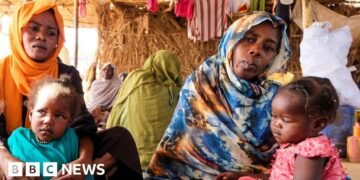
According to the UN, approximately 250,000 individuals remain trapped in el-Fasher, with less than half having managed to escape to external camps for displaced persons. The ongoing violence and RSF’s control over the city jeopardize any attempts for civilians to seek refuge or safety.
Context & Previous Events
The RSF’s siege of el-Fasher marks a significant victory in a broader struggle against Sudan’s regular army, which continues to dominate much of the country. Since the onset of civil war in April 2023, the conflict has displaced over 13 million people, underscoring the urgent need for humanitarian intervention and a cessation of violence.